
Enter your address to receive notifications about new posts to your email.
Articles tagged Yeast
(46 results)
-

Science builds on science, but the databases making that possible are at risk
Scientific discoveries rarely happen in isolation. A finding from one laboratory can inspire an experiment in another, while an observation buried in a decades-old paper might provide the missing piece of an entirely different research question. Sharing scientific findings and building on what others have learned is fundamental to advancing modern biology. One influential example…
-

Yeast 2026: Where the yeast community comes alive
We chatted with Yeast 2026 organizers Vivien Measday, Grant Brown, Caiti Smukowski Heil, and Joseph Schacherer about this year’s conference. Their insights? Yeast 2026 brings research that sparks the future of science, and you won’t want to miss it.
-

Build-a-Genome course: Recruiting an army of undergraduates to synthesize yeast genome
2024 Elizabeth W. Jones Award for Excellence in Education recipient Jef Boeke considers himself a geneticist turned engineer. He transformed his landmark synthetic yeast genome project into a research-heavy teaching course, revolutionizing molecular biology and genetics education.
-
 Science & Publishing
Beer brewers and geneticists collaborate on study of yeast changes during commercial fermentation
Domesticated yeast adapts to harsh brewing tank environments, including little oxygen and lots of alcohol.
-
 News
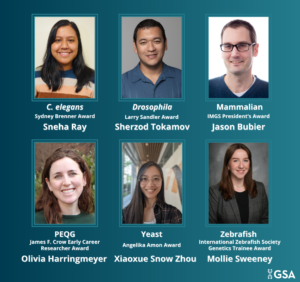
TAGC 2024 Early Career Award Winners
GSA is pleased to announce the winners of the early career awards presented at The Allied Genetics Conference 2024. These awards are specific to particular TAGC communities and recognize early career scientists’ outstanding work on their respective research organisms. The awardees will present their talks in keynote sessions at TAGC 2024. Don’t miss the opportunity…
-
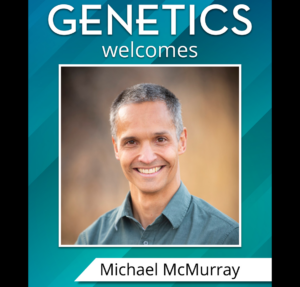
GENETICS welcomes new associate editor
Michael McMurray is an Associate Professor of Cell and Developmental Biology at the University of Colorado, Anschutz Medical Campus. He first began using the power of yeast genetics during his PhD studies with Dan Gottschling at the Fred Hutchinson Cancer Research Center and University of Washington. After investigating the replicative aging process, he became interested in how individual…
-
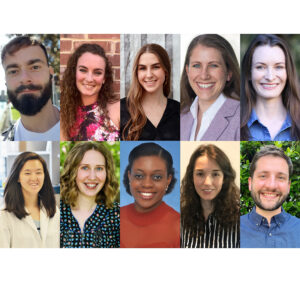
Congratulations to the Spring 2022 DeLill Nasser Awardees!
GSA is pleased to announce the recipients of the DeLill Nasser Award for Professional Development in Genetics for Spring 2022! Given twice a year to graduate students and postdoctoral researchers, DeLill Nasser Awards support attendance at meetings and laboratory courses. The award is named in honor of DeLill Nasser, a long-time GSA supporter and National…
-

Naturally occurring small molecules correct mutant proteins in living cells
Yeast screens explore the therapeutic potential of chemical rescue. Anyone who’s worked in a lab knows that sinking feeling of discovering that the temperature of an incubator, carefully set the night before, has crept up high enough to ruin the experiment. While such a mishap usually spells disaster, occasionally, it can lead to an unexpected…
-
How an anti-fungal medication can stop new blood vessel formation
Discovery of thiabendazole target explains vascular disrupting action. Even after hundreds of millions of years of evolution, some yeast genes persist mostly intact in humans and other vertebrates. Despite the huge differences between yeast and humans, these genes perform the same molecular function in both organisms but have been adapted over time into new contexts.…
-

2021 Genetics Society of America Medal: Douglas Koshland
Failure of chromosomes to segregate properly results in severe medical conditions, or even death. Yet for a long time, it was challenging to study exactly how chromosomes carry out their complex choreography, due to a lack of robust tools for combining chromosome visualization and genetic experiments. Douglas Koshland spent his postdoc studying mammalian chromosome biology…
-

Yeast regain long-lost traits
Yeast circumvent Dollo’s Law and reacquire traits lost tens of millions of years ago from distant relatives. Dollo’s Law, first proposed in the 19th century, holds that evolutionary losses are irreversible — if a species discards a complex trait, it will never reacquire exactly that trait. However, a study published in Genetics highlighted one way that unicellular fungi can…