

Scientific discoveries rarely happen in isolation. A finding from one laboratory can inspire an experiment in another, while an observation buried in a decades-old paper might provide the missing piece of an entirely different research question. Sharing scientific findings and building on what others have learned is fundamental to advancing modern biology.
One influential example of this approach came during the Human Genome Project. In 1996, participating scientists established the Bermuda Principles, which called for newly generated human genome sequence data to be made publicly available as quickly as possible. This commitment to rapid data sharing helped establish a model for scientific collaboration that continues to shape genomics research today.
But making scientific information available is only the first step. Researchers also need ways to find it, understand it, and connect it to what is already known.
That’s where biological knowledgebases come in. These specialized databases bring together decades of scientific research, organizing findings about genes, proteins, and biological processes into reliable, searchable resources. They help scientists find connections between discoveries that might otherwise remain scattered across thousands of publications.
In a new Perspectives piece published in GENETICS, researchers warn that these essential resources are facing a growing funding crisis. Just as scientific research and artificial intelligence (AI) become increasingly dependent on their information, the databases themselves are struggling to survive.
Connecting the dots of scientific discovery
Valerie Wood, a researcher at the University of Cambridge and lead author of the commentary, helps maintain one of these resources. The knowledgebase known as PomBase organizes research on the fission yeast Schizosaccharomyces pombe, a tiny organism that has helped scientists understand fundamental biological processes, including how cells grow and divide.
Although yeast might seem far removed from humans, approximately 70% of its proteins have evolutionarily related counterparts in humans. This makes fission yeast an important model for studying cellular processes that are shared across species and relevant to human biology and disease.
Wood recalls a time when a graduate student might spend four years studying a single gene. Today, researchers increasingly investigate complex biological questions involving dozens or even hundreds of genes and proteins. Resources like PomBase support that work by connecting findings from individual laboratories into a larger picture of how cells function.
For example, when a cell divides, a ring of proteins assembles around the middle and tightens to help separate it into two cells. Understanding this process requires studying numerous proteins, their interactions, and what happens when particular genes are altered. A researcher investigating this process can use PomBase to identify genes associated with abnormal assembly of this ring, examine the effects of different mutations, and explore connections to other proteins involved in cell division. Rather than searching through countless publications to piece together these relationships, researchers can explore the accumulated evidence in one place. These connections help scientists identify gaps in knowledge, develop new hypotheses, and determine which experiments to pursue next.
But PomBase is more than an archive of past discoveries. Wood describes it as “a living system that grows and changes day by day.” As researchers uncover new information, its expert curators continually update the database, connecting new findings to existing knowledge and correcting earlier assumptions when the evidence changes.
The work requires considerable scientific expertise. Curators read published studies, interpret experimental results, standardize terminology, and resolve inconsistencies between findings. This process, called biocuration, transforms individual observations into information that researchers and computer programs can reliably use. And its impact extends well beyond fission yeast.
Information curated by PomBase and FlyBase, a similar resource for fruit fly research, contributes to Gene Ontology, an international system for describing gene functions. Through comparisons between evolutionarily related proteins, annotations produced by each resource support more than a million additional annotations in UniProtKB, a major international protein knowledgebase. In other words, discoveries involving yeast and fruit flies help scientists interpret biological information across many other species, including humans. This interconnected system is becoming even more important with the rapid expansion of AI in scientific research.
Why AI needs human-curated knowledge
AI tools can analyze enormous amounts of biological information, identify patterns, and help researchers generate new hypotheses, but the reliability of the information they generate depends on the quality of the information they use. Without accurate, regularly updated descriptions of genes and proteins, consistent terminology, and connections to experimental evidence, computational systems risk reproducing or amplifying incorrect information.
Wood reports that PomBase is now accessed approximately 50 times more than two years ago, an increase she believes is largely driven by automated AI activity.
While AI is sometimes presented as a technology that could replace human work, many biological AI applications depend on information that human experts have carefully organized, interpreted, and verified. Yet the resources providing that information face serious financial challenges.
What happens when scientific infrastructure loses funding
PomBase is maintained by a core team of just three people: two curators and one developer. Its current funding is scheduled to end in January 2027, and Wood is working to secure additional support. Other major resources have suffered funding cuts and disruptive funding gaps. In 2025, FlyBase lost funding for five curator positions following the termination of National Institutes of Health overseas subawards. The HUGO Gene Nomenclature Committee (HGNC), which maintains standardized names for human genes, also experienced a prolonged funding gap before securing a new NIH award.
These databases serve different purposes, but their importance reaches across the scientific ecosystem. HGNC, for example, ensures that researchers, databases, and clinical systems use consistent names for human genes, such as BRCA1. Without standardized names, connecting genetic information across studies and institutions becomes much more difficult. And when funding disappears, the consequences extend beyond losing access to a website.
Wood explains that PomBase’s existing information could be preserved even if active funding ends. However, without expert curators, new discoveries would no longer be incorporated at the same pace, outdated information could remain uncorrected, and valuable connections between studies might go unnoticed. Researchers would then have to spend more time finding and interpreting information themselves, potentially duplicating work already performed elsewhere. The specialized expertise developed by database curators over many years would also be difficult to replace.
Why are such valuable resources struggling to survive? Part of the problem is that scientific funding systems often prioritize new research over maintaining existing infrastructure. As Wood puts it, funders “want to fund the new building that’s fancy, but they don’t want to repair the roads.”
While their financial support typically comes from individual countries or institutions, biological knowledgebases also serve researchers worldwide. Their benefits are shared globally, but the responsibility for maintaining them often falls to a relatively small number of organizations.
Wood and her colleagues argue that biological databases should be treated as essential scientific infrastructure rather than short-term research projects. They recommend sustained funding, greater recognition of the scientists who maintain these resources, and funding decisions that consider how losing one database can affect many others. The stakes are particularly high as governments and research institutions invest heavily in genomics, precision medicine, and AI-driven drug discovery. All of these ambitions depend on access to reliable, interconnected biological knowledge.
The Human Genome Project demonstrated the power of sharing scientific information so others could build upon it. Biological knowledgebases help extend that principle by transforming individual findings into an evolving body of knowledge that researchers around the world can use.
As scientists investigate increasingly complex biological questions, these resources are becoming more important than ever. Biological knowledgebases hold decades of hard-won data. Protecting them keeps that data working for discoveries no one has yet imagined. To realize that potential, funders, research institutions, and scientific societies must recognize these resources as essential infrastructure and invest in the experts who keep them current.

Jenny Montooth is a science communicator and co-founder of The Science Underground. Jenny is passionate about using creative and innovative strategies to make complex topics engaging and accessible to wider audiences. You can follow Jenny on LinkedIn.
View all posts by Jenny Montooth »Read more in
-

Thank you, GSA community!
Thank you for being a member of the Genetics Society of America! As GSA’s current president, I am writing to tell you about Society projects and initiatives that we hope you will find useful in advancing your science and your career. Scientific research is a collaborative and exciting endeavor. Scientific societies like GSA exist to…
-

Where are they now? Rosalind Franklin Young Investigator Award recipients share updates on their research
Rosalind Franklin Young Investigator Award applications are open–make sure you submit your application or nomination of a colleague by September 30, 2024.
-

University of Minnesota researchers map genome of the last living wild horse species
The study, published in G3: Genes|Genomes|Genetics, is part of larger conservation efforts to save Przewalski’s horse.
-

Congratulations to the Spring 2024 DeLill Nasser Awardees!
GSA is pleased to announce the recipients of the DeLill Nasser Award for Professional Development in Genetics for Spring 2024! Given twice a year to graduate students and postdoctoral researchers, DeLill Nasser Awards support attendance at meetings and laboratory courses. The award is named in honor of DeLill Nasser, a long-time GSA supporter and National Science Foundation…
-

Carolyn Damilola: an NFS Rising Scientist on a lifelong quest to learn more
Carolyn Damilola is an NFS Rising Scientist from Nigeria doing respiratory system research and paving the way for scientists from underrepresented communities through mentorship.
-
What does a good microgrant proposal look like?
Members of the Microgrant Review Committee share their tips for a successful proposal.
-

The first piece of the facial recognition puzzle
New research in GENETICS gives a first peek at the molecular pathway involved in recognizing faces.
-

New Senior Editor Amy MacQueen joins GENETICS
A new senior editor is joining GENETICS in the Genome Integrity and Transmission section. We’re excited to welcome Amy MacQueen to the editorial team.
-

Block party on the zebrafish sex chromosome
Research in G3 identifies a gene regulatory block of the zebrafish genome responsible for overseeing the maternal-to-zygotic-transition.
-

Unraveling the mysteries of duckweed: epigenetic insights from Spirodela polyrhiza
Research published in G3 offers insight into the impact of DNA methylation on clonal propagation in asexually reproducing plants.
-

A microbiologist’s quest to understand CRISPR in bacterial self-defense
2024 Genetics Society of America Medal recipient Luciano Marraffini determined how CRISPR-Cas systems destroy genetic targets with precision, paving the way for gene editing technology development.
-
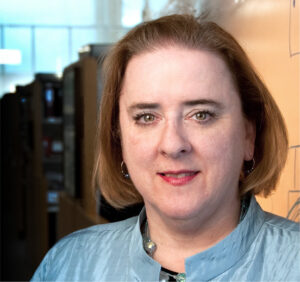
Unlocking mysteries of trait and disease heritability in dogs
2024 Edward Novitski Prize recipient Elaine Ostrander, a pioneer of the domestic dog model, discovered numerous genes affecting dog size, morphology, behavior, and disease susceptibility—many of which have relevance in humans.
-
GSA and collaborators Personal Genetics Education & Dialogue and Reclaiming STEM Institute launch NSF-funded BIO-LEAPS project to support culture change in genetics
We are thrilled to announce that the Genetics Society of America (GSA) is collaborating with the Personal Genetics Education & Dialogue (PGED) based in the Department of Genetics at Harvard Medical School, and the Reclaiming STEM Institute (RSI) on a Leading Culture Change Through Professional Societies of Biology (BIO-LEAPS) grant from the U.S. National Science…
-

Daman Saluja: Navigating Science and Policy in India
In the Paths to Science Policy series, we talk to individuals who have a passion for science policy and are active in advocacy through their various roles and careers. The series aims to inform and guide early career scientists interested in science policy. This series is brought to you by the GSA Early Career Scientist…
-

A fly geneticist’s journey into discovering rules of organ development
2024 George W. Beadle Award recipient Deborah Andrew discovered new genes and pathways in Drosophila salivary gland organogenesis. Now, her work can help optimize cell secretion in therapeutic applications and fight malaria.
-

Małgorzata Gazda: How receiving the DeLill Nasser Award helped her land her dream job
Have you ever experienced an event that changes the course of your life, or in this case, your career? Małgorzata (Gosia) Gazda is Assistant Professor at the University of Montreal and in 2022, she received the DeLill Nasser Award for Professional Development in Genetics, which she used to attend and present at the 2022 Population,…
-

Hongyu Zhao joins GENETICS as new Senior Editor
A new senior editor is joining GENETICS in the Statistical Genetics and Genomics section. We’re excited to welcome Hongyu Zhao to the editorial team.
-
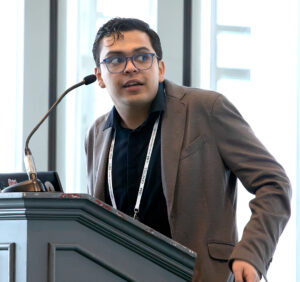
GSA Member Julio Molina Pineda Receives DeLill Nasser Award, Shines at TAGC 2024
“At any career stage, the GSA membership is an amazing investment for any genetics professional!” Julio Molina Pineda is a PhD Candidate in Cell and Molecular Biology and a Research Assistant at the University of Arkansas, and a Doctoral Academy Fellow at the Lewis Lab. In 2023, Julio was awarded the DeLill Nasser Award for…
-
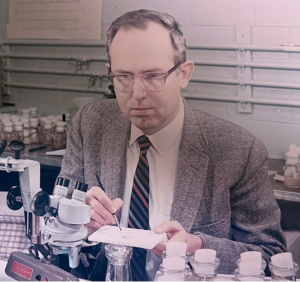
In Memoriam: Ellsworth Herman Grell (1932–2023), a pioneer of Drosophila genome engineering and annotation
Ellsworth (Ed) Grell blessed the Drosophila community through three enduring legacies: as a pioneer of chromosome mechanics, as a primary organizer and synthesizer of genetic knowledge in Drosophila, and as a graceful mentor to those fortunate to have known him personally. Ed grew up in rural Nebraska, completed his undergraduate studies at Iowa State, and…
-
Congratulations to the #Fungal24 Poster Award winners!
We are pleased to announce the recipients of the GSA Poster Awards for posters presented at the 32nd Fungal Genetics Conference! Undergraduate and graduate student members of GSA were eligible for the awards, and a hard-working team of judges made the determinations. Congratulations to all! Felicia Ebot Ojong, The University of Georgia My research is focused…
-
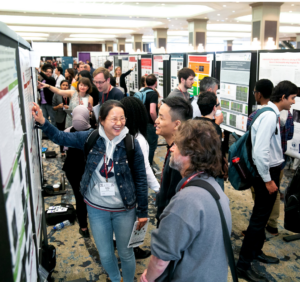
Poster presentation tips for TAGC 2024
You’ve been selected to present a poster at The Allied Genetics Conference 2024 in March—you’ve celebrated, made plans to attend, now what? This is an exciting opportunity to showcase your research and engage with fellow members of the genetics community, so you want to make sure you’re prepared. We wanted to offer you some tips…
-

Maximize your TAGC 2024 experience
A guide to all that National Harbor & DC have to offer Are you joining us for The Allied Genetics Conference 2024 in March? Make the most of your #TAGC24 experience in National Harbor! We know the science will keep you busy, but you deserve to unwind and have some fun, so we’ve curated a…
-
Early Career Leadership Spotlight: Sarah Petrosky
We’re taking time to get to know the members of the GSA’s Early Career Scientist Committees. Join us to learn more about our early career scientist advocates. Sarah PetroskyMultimedia SubcommitteeUniversity of Pittsburgh Research Interest I am interested in understanding adaptation that has been happening recently in populations by dissecting the ways that genes underlying an adaptation…
-
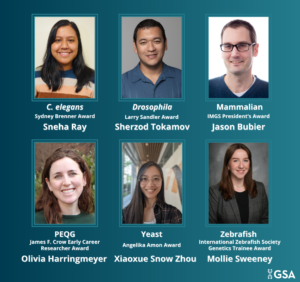
TAGC 2024 Early Career Award Winners
GSA is pleased to announce the winners of the early career awards presented at The Allied Genetics Conference 2024. These awards are specific to particular TAGC communities and recognize early career scientists’ outstanding work on their respective research organisms. The awardees will present their talks in keynote sessions at TAGC 2024. Don’t miss the opportunity…
-
Preeminent geneticists recognized with revamped GSA Awards
In 2022, GSA’s Board of Directors launched an audit to review the five major awards conferred by the Society. Today, we are thrilled to announce the recipients of the reimagined GSA Awards, including the new Genetics Society of America Early Career Medal. The scientists honored this year are recognized by their peers for their outstanding…
-
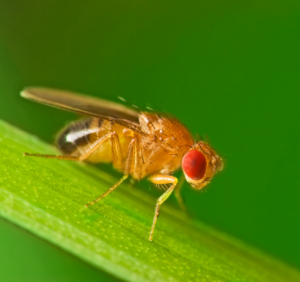
Fly Board funds outreach programs to spread the word about Drosophila research
In 2020, the Fly Board voted to use part of its reserve fund to support efforts to increase trainee participation as well as equity and diversity in the Drosophila community. An awards committee decides how the money will be spent each year, and from 2020–2022, the committee posted a very broad call for applications from…
-
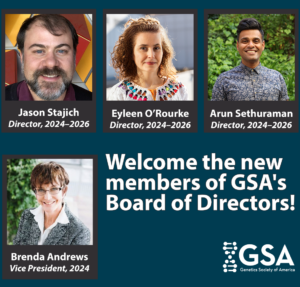
New members of the GSA Board of Directors: 2024–2026
We are pleased to announce the election of four new leaders to the GSA Board of Directors: 2024 Vice President/2025 President Brenda Andrews Professor, University of Toronto It’s an honor to continue my association with the Society by serving as Vice President of the Board of Directors. I have broad knowledge of the ongoing activities…
-

Beyond the bench: Lyric Jorgensen’s path from neuroscientist to director of science policy at NIH
In this interview, Sarah Ruttenberg of the GSA Early Career Scientist Policy and Advocacy Subcommittee talked with Dr. Lyric Jorgenson, the director of science policy for the National Institutes of Health (NIH).
-

Brewing up the next step: Early career scientists’ experiences with community engagement
Aside from presentations, papers, awards, and grants, early stage scientists build meaningful careers through connections with their communities. Staying engaged beyond the lab, whether through participating in workshops, seeking mentors, or communicating with the public, is key. After speaking at BigBREW recently, where we shared our work with “Taking Our Best Shot” (TOBS), we began…
-

Deciphering the genetic clawprints of European-American hybrid lobsters with 79 SNPs
Tensions between Americans and Europeans are running high in European waters. Among lobsters, that is. As a new study in G3: Genes|Genomes|Genetics explains, the European lobster Homarus gammarus, which is already red-listed in parts of its range, is increasingly threatened by the American species Homarus americanus. H. americanus is typically larger and more aggressive than…