

Can you provide a quick overview of your job and what your professional journey looked like?
I was the first in my family to go to college, so I wasn’t totally sure what scientific research looked like until I was in college and started working in a lab. The lab studied fish genetics and they needed people to chop up fish to extract enzymes from them. I thought it was pretty cool, and the head of the lab seemed to be having a great time, so I thought, if you can be old and have a great time, this might be a decent job! After undergraduate school, I went to graduate school, then did a postdoc. I came to the NIH when our institute, NHGRI, was just starting. I went through tenure, became a senior investigator, and for the first 15+years, that was my main job. Then in 1995 my lab discovered there were some BRCA1 mutations that were common in people of Ashkenazi Jewish ancestry, and the implications of that discovery were far beyond my lab. If I wanted to just study the gene, I could have stayed doing that, but the discovery had implications for what we might do to prevent breast cancer. That got me started working with people from other fields like epidemiologists, social scientists, and eventually economists. At some point, that work led to me being asked to take on new responsibilities. I think it started with being asked to run the NIH Center for Inherited Disease Research which is a high-throughput genotyping and sequencing lab that mostly provides services to other institutes. Then I was asked to look after the extramural program for our division—the Ethical, Legal, and Social Implications Research Program—which aims to foster basic and applied research on the ethical, legal, and social implications of genetic and genomic research for individuals, families, and communities. Eventually, I was asked to be director of our division, and I took on overseeing the intramural programs as well which were the policy and program analysis branch and the education and community involvement branch. Those branches have recently been eliminated unfortunately.
How did you feel about being asked to take on these more policy-centric roles and how did you adapt?
You’re never prepared for new big responsibilities. Any new role that’s a bigger job is a lot more work, and it will take a while to figure it out. There are two aspects to roles like this: expertise and people management. In a brand new role you don’t usually have the expertise—I didn’t have policy experience, so I read a lot about policy. A key skill is being able to know where and how to get high-quality information because a number one task of almost all “policy shops” is to gather, analyze, condense, and present information on a specific topic. That is where I developed an appreciation for good and bad policy, and I don’t mean that in terms of right and wrong, but rather how policy is formulated. In terms of people management, luckily I had been managing a lab for years, so I felt relatively comfortable managing people and building a functional team. Good functioning teams are incredibly powerful, you can go much further with such a team than you can doing things solo, and I found that I really enjoyed working with people from different fields. I knew taking on these responsibilities was going to take time away from my independent research, but what I was being asked to do was important to the research enterprise as a whole.
What have you learned about science policy that you feel is important to know for scientists who want to go into the field?
One point I make continuously is that, if you want to be good at making policy, you want to bring in people who are going to be affected by said policy. For example, when making a data sharing policy, you should get input from people who have created and shared data and those who have used shared data. The same would be true for any policy. Also, don’t be afraid of conflicts of interest, because if you’re going to be good at making policy you need to listen to lots of different voices and then figure out which ones are valid and which ones aren’t. Obviously, a policy that said you’re going to ban chocolate would have many people saying, “No!” Some of those people might be working for a chocolate company, but you still want to hear those voices. Getting a variety of voices is critically important because otherwise sometimes we put out policies that are totally impractical.
I also think it’s really important to think about all of the elements of developing a good policy from the start of the policy-making process—a reason to have policy in the first place, a clear goal, analysis of current knowledge and policy, an implementation plan, and a robust evaluation plan. Those last two steps are often forgotten, because people get enamored with the front part, thinking “oh, I’ve got this really important policy, it’s going to change this,” and then they forget about the actual logistics. Without an evaluation plan up front, if you put out a policy that you really like, and three years later you want to evaluate it, you’re going to find evidence to say it’s a great policy. But if you put out criteria for success and failure ahead of time, then you can truly evaluate it properly. You really want to bring the scientific rigor you’ve learned as a scientist into policy evaluation. In general, as a scientist in policy, your goal really should be not to forsake the scientific process. Being a scientist teaches you how to structure a question, evaluate objectively, and differentiate between good data and bad data. Science should always inform policy because policy not backed with science is not good policy.
But, note that I am not a policymaker, and most people who are interested in policy will never actually make policy.
What do those people do then?
Well, a policy job is not the same everywhere, but a lot of people who have policy in their title really work toward supporting the infrastructure and the operation of an organization. They’re mostly answering questions, collecting information, and analyzing policy. There are times when there is some policymaking for the institute itself, but we don’t make policy for the country, even at NIH. One of the really important things policy offices do is collect information. So if we need to know more about, say, a specific germline, we would have a small group that would actually collect and collate the information and produce what we call briefing documents. Those are often quite short and designed to inform leadership about what the group has found while maintaining objectivity—this is not advocacy. This job requires a high degree of science literacy and an ability to translate science to others concisely in plain language without compromising the facts. As a scientist, you have the tools that the people you’re serving might not have to understand science, and you have a responsibility to communicate it well to people from a wide range of backgrounds. Those communication skills are critical. The facts speak for themselves, but you have to give them flesh and bones and a voice.
The other thing that policy offices do is keep an eye on what’s going on in the legislative process. If there’s a bill pending that might impact the field that you’re in, you’d want to know about it. At NIH, that’s the extent of it—we can’t interact with legislators because we are not supposed to lobby. However, at a university for example, a policy person might go to a meeting with legislators, along with their university president, or their provost, and provide them with background information and goals for what they’re trying to achieve. In these instances, you might want to be persuasive with the facts.
A unique function of the policy staff at NIH is that we often respond to public queries regarding health research. Sometimes we even draft responses on behalf of the U.S. Department of Health and Human Services secretary.
What advice do you have for an early career scientist who is interested in science policy?
There are always policy people at your institution or at least policy-adjacent people. Make time to talk to them, do informational interviews. People are often happy to take the time to tell you what they do. Scientists usually get formal training in policy through fellowships like AAAS. There are quite a few of them. We used to have a fellowship program and those fellows have gone on to work on Capitol Hill, for state governments, or at universities and NGOs. But obviously fellowships are not the only way to do it. There are also a lot of good online resources. Assign yourself an issue, maybe one that you’re not an expert on and try writing a one-page neutral briefing document covering the issue for non-experts. Expect it to take a few days, but see if you like that. I think one of the most challenging parts of a science policy job is the vast range of topics that can get tossed your way, especially in a smaller group, where you have to be informed about everything. Also, be prepared for quick turnaround times or for ideas to get shot down. Even the best and most thoughtful policy work entails compromise. In the lab you keep doing experiments until you have all the answers you seek. In policy there will always be some unknowns and compromises to be made.

Read more in
-

Thank you, GSA community!
Thank you for being a member of the Genetics Society of America! As GSA’s current president, I am writing to tell you about Society projects and initiatives that we hope you will find useful in advancing your science and your career. Scientific research is a collaborative and exciting endeavor. Scientific societies like GSA exist to…
-

Where are they now? Rosalind Franklin Young Investigator Award recipients share updates on their research
Rosalind Franklin Young Investigator Award applications are open–make sure you submit your application or nomination of a colleague by September 30, 2024.
-

University of Minnesota researchers map genome of the last living wild horse species
The study, published in G3: Genes|Genomes|Genetics, is part of larger conservation efforts to save Przewalski’s horse.
-

Congratulations to the Spring 2024 DeLill Nasser Awardees!
GSA is pleased to announce the recipients of the DeLill Nasser Award for Professional Development in Genetics for Spring 2024! Given twice a year to graduate students and postdoctoral researchers, DeLill Nasser Awards support attendance at meetings and laboratory courses. The award is named in honor of DeLill Nasser, a long-time GSA supporter and National Science Foundation…
-

Carolyn Damilola: an NFS Rising Scientist on a lifelong quest to learn more
Carolyn Damilola is an NFS Rising Scientist from Nigeria doing respiratory system research and paving the way for scientists from underrepresented communities through mentorship.
-
What does a good microgrant proposal look like?
Members of the Microgrant Review Committee share their tips for a successful proposal.
-

The first piece of the facial recognition puzzle
New research in GENETICS gives a first peek at the molecular pathway involved in recognizing faces.
-

New Senior Editor Amy MacQueen joins GENETICS
A new senior editor is joining GENETICS in the Genome Integrity and Transmission section. We’re excited to welcome Amy MacQueen to the editorial team.
-

Block party on the zebrafish sex chromosome
Research in G3 identifies a gene regulatory block of the zebrafish genome responsible for overseeing the maternal-to-zygotic-transition.
-

Unraveling the mysteries of duckweed: epigenetic insights from Spirodela polyrhiza
Research published in G3 offers insight into the impact of DNA methylation on clonal propagation in asexually reproducing plants.
-

A microbiologist’s quest to understand CRISPR in bacterial self-defense
2024 Genetics Society of America Medal recipient Luciano Marraffini determined how CRISPR-Cas systems destroy genetic targets with precision, paving the way for gene editing technology development.
-
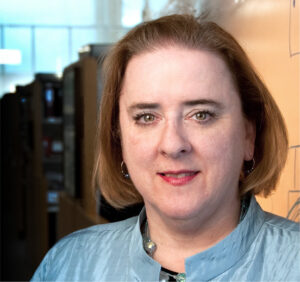
Unlocking mysteries of trait and disease heritability in dogs
2024 Edward Novitski Prize recipient Elaine Ostrander, a pioneer of the domestic dog model, discovered numerous genes affecting dog size, morphology, behavior, and disease susceptibility—many of which have relevance in humans.
-
GSA and collaborators Personal Genetics Education & Dialogue and Reclaiming STEM Institute launch NSF-funded BIO-LEAPS project to support culture change in genetics
We are thrilled to announce that the Genetics Society of America (GSA) is collaborating with the Personal Genetics Education & Dialogue (PGED) based in the Department of Genetics at Harvard Medical School, and the Reclaiming STEM Institute (RSI) on a Leading Culture Change Through Professional Societies of Biology (BIO-LEAPS) grant from the U.S. National Science…
-

Daman Saluja: Navigating Science and Policy in India
In the Paths to Science Policy series, we talk to individuals who have a passion for science policy and are active in advocacy through their various roles and careers. The series aims to inform and guide early career scientists interested in science policy. This series is brought to you by the GSA Early Career Scientist…
-
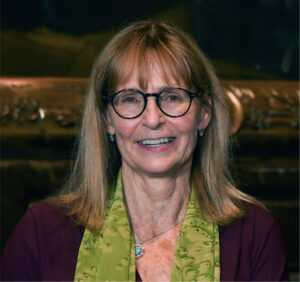
A fly geneticist’s journey into discovering rules of organ development
2024 George W. Beadle Award recipient Deborah Andrew discovered new genes and pathways in Drosophila salivary gland organogenesis. Now, her work can help optimize cell secretion in therapeutic applications and fight malaria.
-

Małgorzata Gazda: How receiving the DeLill Nasser Award helped her land her dream job
Have you ever experienced an event that changes the course of your life, or in this case, your career? Małgorzata (Gosia) Gazda is Assistant Professor at the University of Montreal and in 2022, she received the DeLill Nasser Award for Professional Development in Genetics, which she used to attend and present at the 2022 Population,…
-

Hongyu Zhao joins GENETICS as new Senior Editor
A new senior editor is joining GENETICS in the Statistical Genetics and Genomics section. We’re excited to welcome Hongyu Zhao to the editorial team.
-
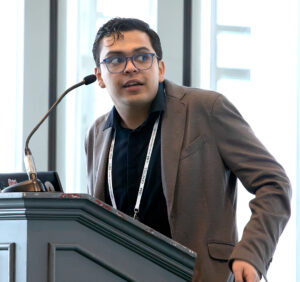
GSA Member Julio Molina Pineda Receives DeLill Nasser Award, Shines at TAGC 2024
“At any career stage, the GSA membership is an amazing investment for any genetics professional!” Julio Molina Pineda is a PhD Candidate in Cell and Molecular Biology and a Research Assistant at the University of Arkansas, and a Doctoral Academy Fellow at the Lewis Lab. In 2023, Julio was awarded the DeLill Nasser Award for…
-
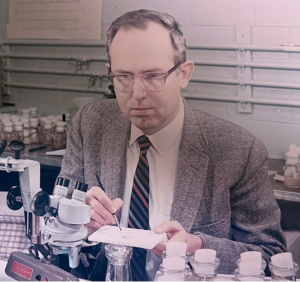
In Memoriam: Ellsworth Herman Grell (1932–2023), a pioneer of Drosophila genome engineering and annotation
Ellsworth (Ed) Grell blessed the Drosophila community through three enduring legacies: as a pioneer of chromosome mechanics, as a primary organizer and synthesizer of genetic knowledge in Drosophila, and as a graceful mentor to those fortunate to have known him personally. Ed grew up in rural Nebraska, completed his undergraduate studies at Iowa State, and…
-
Congratulations to the #Fungal24 Poster Award winners!
We are pleased to announce the recipients of the GSA Poster Awards for posters presented at the 32nd Fungal Genetics Conference! Undergraduate and graduate student members of GSA were eligible for the awards, and a hard-working team of judges made the determinations. Congratulations to all! Felicia Ebot Ojong, The University of Georgia My research is focused…
-
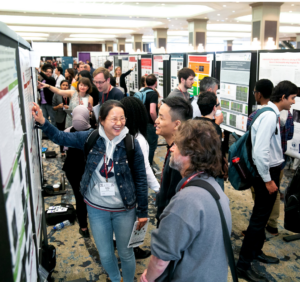
Poster presentation tips for TAGC 2024
You’ve been selected to present a poster at The Allied Genetics Conference 2024 in March—you’ve celebrated, made plans to attend, now what? This is an exciting opportunity to showcase your research and engage with fellow members of the genetics community, so you want to make sure you’re prepared. We wanted to offer you some tips…
-

Maximize your TAGC 2024 experience
A guide to all that National Harbor & DC have to offer Are you joining us for The Allied Genetics Conference 2024 in March? Make the most of your #TAGC24 experience in National Harbor! We know the science will keep you busy, but you deserve to unwind and have some fun, so we’ve curated a…
-
Early Career Leadership Spotlight: Sarah Petrosky
We’re taking time to get to know the members of the GSA’s Early Career Scientist Committees. Join us to learn more about our early career scientist advocates. Sarah PetroskyMultimedia SubcommitteeUniversity of Pittsburgh Research Interest I am interested in understanding adaptation that has been happening recently in populations by dissecting the ways that genes underlying an adaptation…
-
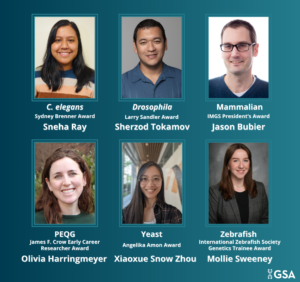
TAGC 2024 Early Career Award Winners
GSA is pleased to announce the winners of the early career awards presented at The Allied Genetics Conference 2024. These awards are specific to particular TAGC communities and recognize early career scientists’ outstanding work on their respective research organisms. The awardees will present their talks in keynote sessions at TAGC 2024. Don’t miss the opportunity…
-
Preeminent geneticists recognized with revamped GSA Awards
In 2022, GSA’s Board of Directors launched an audit to review the five major awards conferred by the Society. Today, we are thrilled to announce the recipients of the reimagined GSA Awards, including the new Genetics Society of America Early Career Medal. The scientists honored this year are recognized by their peers for their outstanding…
-
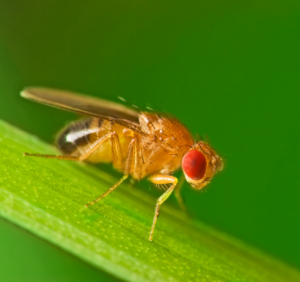
Fly Board funds outreach programs to spread the word about Drosophila research
In 2020, the Fly Board voted to use part of its reserve fund to support efforts to increase trainee participation as well as equity and diversity in the Drosophila community. An awards committee decides how the money will be spent each year, and from 2020–2022, the committee posted a very broad call for applications from…
-
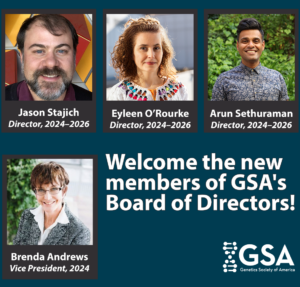
New members of the GSA Board of Directors: 2024–2026
We are pleased to announce the election of four new leaders to the GSA Board of Directors: 2024 Vice President/2025 President Brenda Andrews Professor, University of Toronto It’s an honor to continue my association with the Society by serving as Vice President of the Board of Directors. I have broad knowledge of the ongoing activities…
-

Research funding roadmap: How policy debates are impacting today’s funding model
The previous post in this two-part series focused on the United State’s current research funding model and the history behind it—but today, we’re facing policy debates that may radically change this long-standing process. In the last two years, the U.S. federal administration has pushed for changes to how federal funds are allocated and used. A…
-

Research funding roadmap: The route to today’s model
Research funding today is complicated. Much of that complexity traces back to World War II, which reshaped who pays for science. Prior to the war, most research funding came from philanthropic donations and government labs. Depending on the donor, funds were used for a new building or to support a specific researcher. For instance, Thomas…
-

Anatomy of an R01 Grant
If you work in a lab that receives funding from the U.S. federal government, chances are that you’ve heard the term “R01” (pronounced “R – OH – 1”). An R01 is one of the many grant types awarded by the National Institutes of Health (NIH). The R series, or Research Grant, is the most common…