

Michael O’Connor, an emeritus professor of genetics, cell biology, and development at University of Minnesota and recipient of the 2026 Edward Novitski Prize, can still be seen at the bench running experiments—something he’s been doing throughout his whole career. “I like the interaction and I’m a bench scientist,” he says. “When you’re out in the lab, you can get a whole discussion going and not only is it more fun, it also helps students and postdocs interact with me in a more familiar manner.”
Heidi Bretscher, a former postdoctoral researcher in O’Connor’s lab, recalls, “I’m quite sure Mike has never missed a day in the fly room. He has an absolutely incredible passion for science. He just lives it and breathes it and loves it.” Since starting her lab as an assistant professor of biological sciences at University of Memphis, Bretscher says she’s “determined to be just like Mike,” spending time in the lab every day.
O’Connor began his postdoctoral studies at Harvard Medical School in the early days of cloning genes. “[Biologists] were just beginning to understand that many eukaryotic genes were big compared to prokaryotes so there was a need to clone and manipulate large pieces of DNA,” he says. O’Connor, who was studying a set of genes that controlled body segmentation in Drosophila, then developed the first bacterial artificial chromosome (BAC) for his studies. BACs soon became widely used in the 1990s.
In 1988, O’Connor started a lab at University of California, Irvine where he began studying the role of TGFꞵ signaling in regulating development, body size, and metabolic function in Drosophila. One key study looked at how the dorsal cells in the Drosophila embryo differentiate into distinct tissues. There, he identified mutants in the TGFꞵ signaling pathway and used biochemical and computational assays to further understand their function in determining cell fate. He teamed up with Hans Othmer’s group at University of Minnesota to develop a mathematical model that would show how a pair of proteins within the TGFꞵ superfamily diffuse and form gradients in the embryo to pattern the dorsal-ventral axis in Drosophila. “His lab has contributed a huge amount to body and size scaling in terms of TGFꞵ signaling,” says Bretscher.
O’Connor’s philosophy in research is to go where the science leads him even if that’s a completely different area of work. This is an outlook he has instilled in his trainees, allowing them to explore different directions. “He’s just so supportive of what anyone in his lab wants to do,” says Bretscher. O’Connor explains, “It’s satisfying to be able to take something that you know nothing about, learn about it, and then be able to do something new in the field.”
In this spirit, he began working on the arthropod molting hormone ecdysone in the early 2000s after a serendipitous finding when he came across a mutant with a “spectacular phenotype” while searching for a TGFꞵ receptor. “What’s special to me about this story is that I didn’t know anything about ecdysone,” O’Connor says. He then devoted the next decades to deciphering the enzymes involved in converting cholesterol to ecdysone and understanding how the neuroendocrine system regulates ecdysone pulse generation.
“I was really impressed by the fact that he could lead two research programs at the highest level in two very different fields,” says Pierre Leopold, group leader of genetics and physiology of growth at Institut Curie. Leopold and O’Connor began collaborating when they realized they were both researching neurons that produce prothoracicotropic hormone (PTTH), a hormone that regulates ecdysone synthesis. This collaboration led to the finding that these neurons control both developmental transitions and the response to light cues so that the larvae can pupate in the dark away from predators. Later, they looked at how null mutations of the Ptth gene affected development in Drosophila. Leopold, who describes his collaboration with O’Connor as “probably the most enjoyable part of my career,” says that O’Connor is “one of the very best scientists in biology.”
Since retiring, O’Connor spends stretches of time at the lab bench and then takes time off to see family or compete in ski racing competitions. “My philosophy has always been work hard, play hard,” he says.
Looking back over 40 years of Drosophila research, O’Connor has noticed how advances in technology such as sequencing and microscopy have changed the way biologists do science. But most of all, he notes the contributions of his entire lab. “It’s all the people that have done that work that are really responsible for the award,” says O’Connor. “None of this would have happened without the people that have been in the lab.”
Please join us in congratulating Michael O’Connor on receiving the Edward Novitski Prize in recognition of his creativity and intellectual ingenuity in solving problems in genetics research.

Guest posts are contributed by members of our community. The views expressed in guest posts are those of the author(s) and are not necessarily endorsed by the Genetics Society of America. If you'd like to write a guest post, e-mail communications@genetics-gsa.org.
View all posts by Guest Author »Read more in
-

Thank you, GSA community!
Thank you for being a member of the Genetics Society of America! As GSA’s current president, I am writing to tell you about Society projects and initiatives that we hope you will find useful in advancing your science and your career. Scientific research is a collaborative and exciting endeavor. Scientific societies like GSA exist to…
-

Where are they now? Rosalind Franklin Young Investigator Award recipients share updates on their research
Rosalind Franklin Young Investigator Award applications are open–make sure you submit your application or nomination of a colleague by September 30, 2024.
-

University of Minnesota researchers map genome of the last living wild horse species
The study, published in G3: Genes|Genomes|Genetics, is part of larger conservation efforts to save Przewalski’s horse.
-

Congratulations to the Spring 2024 DeLill Nasser Awardees!
GSA is pleased to announce the recipients of the DeLill Nasser Award for Professional Development in Genetics for Spring 2024! Given twice a year to graduate students and postdoctoral researchers, DeLill Nasser Awards support attendance at meetings and laboratory courses. The award is named in honor of DeLill Nasser, a long-time GSA supporter and National Science Foundation…
-

Carolyn Damilola: an NFS Rising Scientist on a lifelong quest to learn more
Carolyn Damilola is an NFS Rising Scientist from Nigeria doing respiratory system research and paving the way for scientists from underrepresented communities through mentorship.
-
What does a good microgrant proposal look like?
Members of the Microgrant Review Committee share their tips for a successful proposal.
-

The first piece of the facial recognition puzzle
New research in GENETICS gives a first peek at the molecular pathway involved in recognizing faces.
-

New Senior Editor Amy MacQueen joins GENETICS
A new senior editor is joining GENETICS in the Genome Integrity and Transmission section. We’re excited to welcome Amy MacQueen to the editorial team.
-

Block party on the zebrafish sex chromosome
Research in G3 identifies a gene regulatory block of the zebrafish genome responsible for overseeing the maternal-to-zygotic-transition.
-

Unraveling the mysteries of duckweed: epigenetic insights from Spirodela polyrhiza
Research published in G3 offers insight into the impact of DNA methylation on clonal propagation in asexually reproducing plants.
-

A microbiologist’s quest to understand CRISPR in bacterial self-defense
2024 Genetics Society of America Medal recipient Luciano Marraffini determined how CRISPR-Cas systems destroy genetic targets with precision, paving the way for gene editing technology development.
-
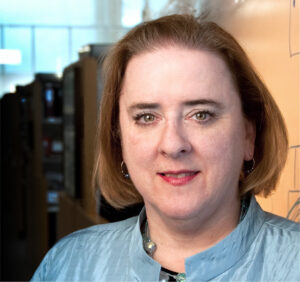
Unlocking mysteries of trait and disease heritability in dogs
2024 Edward Novitski Prize recipient Elaine Ostrander, a pioneer of the domestic dog model, discovered numerous genes affecting dog size, morphology, behavior, and disease susceptibility—many of which have relevance in humans.
-
GSA and collaborators Personal Genetics Education & Dialogue and Reclaiming STEM Institute launch NSF-funded BIO-LEAPS project to support culture change in genetics
We are thrilled to announce that the Genetics Society of America (GSA) is collaborating with the Personal Genetics Education & Dialogue (PGED) based in the Department of Genetics at Harvard Medical School, and the Reclaiming STEM Institute (RSI) on a Leading Culture Change Through Professional Societies of Biology (BIO-LEAPS) grant from the U.S. National Science…
-

Daman Saluja: Navigating Science and Policy in India
In the Paths to Science Policy series, we talk to individuals who have a passion for science policy and are active in advocacy through their various roles and careers. The series aims to inform and guide early career scientists interested in science policy. This series is brought to you by the GSA Early Career Scientist…
-
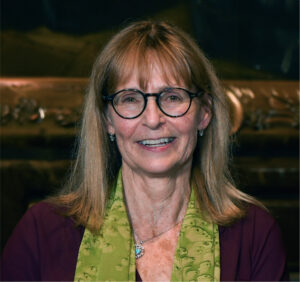
A fly geneticist’s journey into discovering rules of organ development
2024 George W. Beadle Award recipient Deborah Andrew discovered new genes and pathways in Drosophila salivary gland organogenesis. Now, her work can help optimize cell secretion in therapeutic applications and fight malaria.
-

Małgorzata Gazda: How receiving the DeLill Nasser Award helped her land her dream job
Have you ever experienced an event that changes the course of your life, or in this case, your career? Małgorzata (Gosia) Gazda is Assistant Professor at the University of Montreal and in 2022, she received the DeLill Nasser Award for Professional Development in Genetics, which she used to attend and present at the 2022 Population,…
-

Hongyu Zhao joins GENETICS as new Senior Editor
A new senior editor is joining GENETICS in the Statistical Genetics and Genomics section. We’re excited to welcome Hongyu Zhao to the editorial team.
-
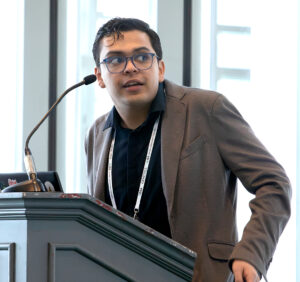
GSA Member Julio Molina Pineda Receives DeLill Nasser Award, Shines at TAGC 2024
“At any career stage, the GSA membership is an amazing investment for any genetics professional!” Julio Molina Pineda is a PhD Candidate in Cell and Molecular Biology and a Research Assistant at the University of Arkansas, and a Doctoral Academy Fellow at the Lewis Lab. In 2023, Julio was awarded the DeLill Nasser Award for…
-
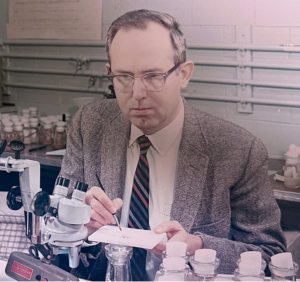
In Memoriam: Ellsworth Herman Grell (1932–2023), a pioneer of Drosophila genome engineering and annotation
Ellsworth (Ed) Grell blessed the Drosophila community through three enduring legacies: as a pioneer of chromosome mechanics, as a primary organizer and synthesizer of genetic knowledge in Drosophila, and as a graceful mentor to those fortunate to have known him personally. Ed grew up in rural Nebraska, completed his undergraduate studies at Iowa State, and…
-

Congratulations to the #Fungal24 Poster Award winners!
We are pleased to announce the recipients of the GSA Poster Awards for posters presented at the 32nd Fungal Genetics Conference! Undergraduate and graduate student members of GSA were eligible for the awards, and a hard-working team of judges made the determinations. Congratulations to all! Felicia Ebot Ojong, The University of Georgia My research is focused…
-
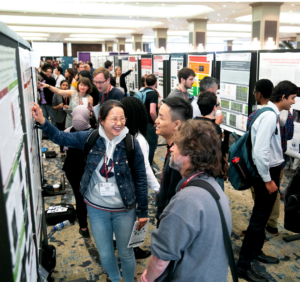
Poster presentation tips for TAGC 2024
You’ve been selected to present a poster at The Allied Genetics Conference 2024 in March—you’ve celebrated, made plans to attend, now what? This is an exciting opportunity to showcase your research and engage with fellow members of the genetics community, so you want to make sure you’re prepared. We wanted to offer you some tips…
-

Maximize your TAGC 2024 experience
A guide to all that National Harbor & DC have to offer Are you joining us for The Allied Genetics Conference 2024 in March? Make the most of your #TAGC24 experience in National Harbor! We know the science will keep you busy, but you deserve to unwind and have some fun, so we’ve curated a…
-
Early Career Leadership Spotlight: Sarah Petrosky
We’re taking time to get to know the members of the GSA’s Early Career Scientist Committees. Join us to learn more about our early career scientist advocates. Sarah PetroskyMultimedia SubcommitteeUniversity of Pittsburgh Research Interest I am interested in understanding adaptation that has been happening recently in populations by dissecting the ways that genes underlying an adaptation…
-
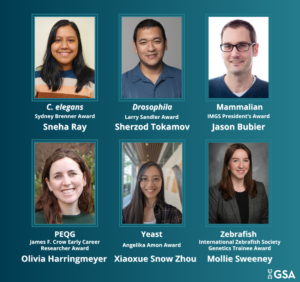
TAGC 2024 Early Career Award Winners
GSA is pleased to announce the winners of the early career awards presented at The Allied Genetics Conference 2024. These awards are specific to particular TAGC communities and recognize early career scientists’ outstanding work on their respective research organisms. The awardees will present their talks in keynote sessions at TAGC 2024. Don’t miss the opportunity…
-

Preeminent geneticists recognized with revamped GSA Awards
In 2022, GSA’s Board of Directors launched an audit to review the five major awards conferred by the Society. Today, we are thrilled to announce the recipients of the reimagined GSA Awards, including the new Genetics Society of America Early Career Medal. The scientists honored this year are recognized by their peers for their outstanding…
-
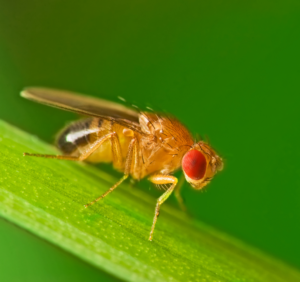
Fly Board funds outreach programs to spread the word about Drosophila research
In 2020, the Fly Board voted to use part of its reserve fund to support efforts to increase trainee participation as well as equity and diversity in the Drosophila community. An awards committee decides how the money will be spent each year, and from 2020–2022, the committee posted a very broad call for applications from…
-
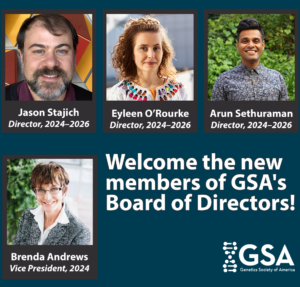
New members of the GSA Board of Directors: 2024–2026
We are pleased to announce the election of four new leaders to the GSA Board of Directors: 2024 Vice President/2025 President Brenda Andrews Professor, University of Toronto It’s an honor to continue my association with the Society by serving as Vice President of the Board of Directors. I have broad knowledge of the ongoing activities…
-

Genetic model turns routine mating into a visible injury model
A new model of copulatory wounding in Drosophila melanogaster offers a genetic tool to study sexual conflict.
-

Genomic Prediction: Submissions welcome in G3
As Genomic Prediction continues to gain momentum, we’re looking for impactful research to publish. Could your work be the next scientific breakthrough?
-

GENETICS and G3 welcome new editors
We’re excited to welcome new editors to the GENETICS and G3 editorial boards.