

This week, Ling Loh of the Early Career Scientist Career Development Subcommittee interviewed Jiae Lee from California State University (CSU) Long Beach for our “Landing a faculty position” series.
On job applications
Ling: Can you briefly describe your career trajectory?
Jiae: I completed both my undergraduate and master’s degrees in South Korea. As a freshman, I joined a microbiology lab for a summer program and fell in love with the research environment. That experience set the direction for my scientific career. I stayed in the same lab for six years, eventually earning my master’s degree while studying glycosylation across different model systems.
After that, I moved to the United States. While I was at University of Texas at Austin, I married a fellow graduate student. During that time, I took a two-year hiatus from formal academic training and volunteered in a research lab. Even though the work was unpaid, those experiences—and strong letters from my advisors—helped me secure a spot in the PhD program at the University of Washington in Seattle where I studied Drosophila sensory neuron development. Though I didn’t do lab rotations, I highly recommend doing at least one or two so students can understand a PI’s mentoring style and lab culture before committing to a five-year (or longer) program.
For my postdoc, I shifted from single-cell level of neurodevelopment to whole-organism physiology, using Drosophila to study cancer-induced changes in muscle mass and lipid metabolism. I had originally planned to do a short, two-year postdoc—mainly because biotech and education positions I was considering required it. But I came to enjoy the work much more than expected and stayed as a research postdoc for six years.
My husband and I were long-distance for much of that time after he moved to University of California, Irvine (UCI) to start his lab. I also contemplated returning to South Korea. But when COVID hit, I transitioned to working remotely and eventually transferred to UCI as a visiting scholar through a work visa. I published a major paper during my final years as a postdoc and then began applying for faculty positions. I’m now in my third year as an assistant professor at CSU Long Beach.
Ling: How long did it take you to start preparing materials for your applications and to eventually land a faculty position?
Jiae: About two years. I began applying at the end of my fifth postdoc year. That first cycle, I made it to the final round but didn’t receive an offer. Because of personal circumstances, the next cycle felt like it had to be my last—and fortunately, that round resulted in two official offers and two “underground” talks.
For job searching, I recommend starting with online postings. It takes time to understand the landscape. The “Future PI” Slack group is excellent—there’s a large running list of openings, plus discussions about applicants’ experiences. I’d just advise taking strong opinions with a grain of salt. Still, knowing the terrain helps enormously with strategy and negotiation.
A practical tip: Create an Excel sheet to track each job—type of institution, nine- vs. 12-month salary, application links, deadlines, and all required materials.
I’ve also noticed that positions requiring four recommendation letters often receive fewer applicants because it’s harder to secure that many strong letters. One of the most important reasons to start early is to give your letter writers time. Ask your advisors directly if they can write strong letters. It really makes a difference.
The research statement also takes substantial time. It should reflect what you’ve done and where you want to go. Tailoring is helpful, especially for positions at different types of institutions (R1 vs. R2), but not every statement needs to be rewritten completely. If your university offers teaching bootcamps during your postdoc, take advantage of them—those experiences are invaluable when applying to teaching-focused schools.
Ling: How did you tailor your application materials (CV, research statement, teaching statement, diversity statement) for different types of institutions?
Jiae: I applied to 16 institutions, each with different deadlines, and spent roughly three months developing my materials. Every application required a set of statements plus a cover letter.
Some candidates apply to 40 or 50 jobs because application fees are nonexistent. I decided instead to focus on a smaller number and tailored my cover letters and DEI statements to each department. I preferred those with strong teaching components and applied mainly to them. I also considered geographical location first because of personal circumstances, and lastly, the departmental fit.
The job description might sound generic, but departments often have internal discussions identifying gaps in their teaching or research areas. That’s why referencing potential collaborators or complementary expertise in your letter can help.
It was incredibly helpful to have people—especially those who had recently been on search committees or recently gone through the job search—review my documents. Ideally, prepare early enough so you can revise your materials after gathering feedback.
Ling: Were there any resources (websites, workshops, mentors, etc.) that were especially helpful in preparing your materials?
Jiae: The PALM Initiative was extremely valuable. It was a National Science Foundation-funded mentoring and teaching program for postdocs interested in scientific education. I was matched to a mentor that helped me redesign syllabi and incorporate active learning. We eventually wrote an education research paper together, too.
Mentors and advisors across my scientific networks provided honest, high-quality feedback through small projects and discussions.
Workshops—especially through the Office of Postdoctoral Affairs—were great for learning the specific language needed for job applications. It helped me to craft my teaching philosophy, for example.
My husband, who had gone through the job market earlier, was also a tremendous resource.
Ling: Are there any particular organizations, listservs, or websites you would recommend for finding job openings?
Jiae: The Professor Is In is a well-known resource. It is a blog with extensive advice on interviews, negotiation, academic etiquette, and nonverbal communication cues. Not everything is universally applicable, but it really helped me understand how committees think and what behaviors signal preparedness.
On interviews
Ling: What advice would you give applicants regarding the first-round (remote) interviews?
Jiae: First-round interviews are typically over Zoom or by phone, followed by on-site visits for the shortlisted candidates. Committees learn a lot from these conversations—not just from your words but from your overall presence. Many questions will be drawn directly from your application materials, particularly your research and teaching statements. They will ask details already mentioned in your statements, including what you think is best practice and what things you would change, so know your documents inside out.
To prepare, I generated a list of potential questions and wrote short bullet-point answers. It’s fine to glance at notes during a video interview if it helps you stay concise and confident. I organized my notes into research- and teaching-related categories. And of course, practice, practice, practice!
Some common questions include:
- Why did you choose this department? By the time you’re interviewed, you’ve already met their basic criteria. They want to know whether you are genuinely interested or simply collecting offers. Be prepared to provide reasons grounded in research fit, potential collaborations, or institutional strengths. Maybe it is an institute that has good work in RNA studies, great opportunity for collaboration, or a great undergraduate population. I think specifying preference for the geographical region is not convincing, unless you have a concrete personal reason.
- What is your research about? Be concise when talking about your research statement. Give a one- to two- sentence overview, then focus on significance and future directions. The committee tends to be interested in why the project is fundable in particular.
- Why would you choose us if you receive multiple offers? You can mention collaborators, programs you’d join or lead, or specific departmental strengths.
- What challenges do you foresee? This isn’t about exposing vulnerabilities but demonstrating maturity and problem-solving. For example, you may be asked how you would handle a workplace conflict—perhaps a disagreement between colleagues or tension within your lab. For example, this may be an opportunity to show that you can draw on principles from workplace violence prevention training: de-escalating the situation, listening carefully to each person’s perspective, and responding with fairness and professionalism. Demonstrating that you can approach conflict constructively reflects not only your personality but also your capacity to foster a healthy lab and departmental environment.
Another common scenario involves sudden logistical challenges—for instance, if a colleague must take emergency leave and you are asked to step in to teach their course with only a week’s notice. Interviewers are looking to see whether you can stay flexible, be a team player, and think creatively under pressure while still maintaining responsibility for your own commitments.
These scenario-based questions give you space to illustrate your problem-solving skills, adaptability, and willingness to support the department when unexpected situations arise.
I received many DEI questions as well. For example:
- How would you build an inclusive lab environment? I emphasized my experiences as a woman in science, my ability to support culturally diverse students, and structured my answers with a clear opening, body, and measurable outcome.
- What qualities make a mentor truly welcoming and effective for mentees from diverse backgrounds, identities, and experiences? Be ready to articulate what makes an outstanding mentor in your own words, even if it’s already in your teaching statement.
At the end, when they ask, “Do you have any questions for us?” avoid saying no. It’s too early to bring up salary though. I would instead reiterate and emphasize what I want to show as my biggest strengths. For example, I felt I could appeal in teaching. Asking them “what resources are there to support student travel?” can incite their pride in their own resources. “As a junior faculty, what resources are there to support me? What about workshops? Are there mentor-mentee systems for new faculty?” These questions might be an indication on how easy it is for junior faculty to join. Mentioning your willingness to enhance collaboration, organizing faculty seminars and identifying if there are consortia in the region, can lead into how one can step up and organize if there are gaps. These questions show engagement and allow the interviewers to highlight their institution’s strengths.
On your transition to your current faculty role
Ling: What does a “day in your life” in your current role look like?
Jiae: In many ways, you become a small business owner. You’re responsible for building a team—even if students aren’t paid employees—and for creating meaningful learning opportunities. Over time, I developed a more formal hiring protocol and began writing pre-prepared responses for students I couldn’t take into the lab.
I use a mentor-mentee compact outlining expectations on both sides. It takes time but prevents misunderstandings.
Budget management is another major responsibility. You must use startup funds wisely, learn the purchasing system, and sometimes request extensions. Hiring a short-term technician can help keep the lab running smoothly.
As a PI, you oversee research more than you perform it yourself. You may take two weeks to establish a protocol, and then students spend months validating it. Because publications are essential for tenure, sustainable project design is critical—especially at an R2 institution like ours, which has a large undergraduate population and fewer graduate students.
Teaching loads vary. At my university, new faculty are often given reduced teaching for the first two years. Afterward, the standard is two courses per semester, though obtaining grants can reduce the load further. My schedule typically includes lecture days, lab days, weekly lab meetings, one-on-one student mentoring, office hours, grading, and preparing course materials.
Service work is also substantial: reviewing travel grants, internal mini-grants, faculty and student awards, and training students on how to prepare scientific posters.
And last but not least, grant writing expectations vary widely by institution, but it remains a significant part of the job.
Ling: Would you be open to early career scientists reaching out to you for advice, and if so, how can they reach out to you?
Jiae: Yes, they can reach me at Jiae.Lee@csulb.edu.

Read more in
-

Thank you, GSA community!
Thank you for being a member of the Genetics Society of America! As GSA’s current president, I am writing to tell you about Society projects and initiatives that we hope you will find useful in advancing your science and your career. Scientific research is a collaborative and exciting endeavor. Scientific societies like GSA exist to…
-

Where are they now? Rosalind Franklin Young Investigator Award recipients share updates on their research
Rosalind Franklin Young Investigator Award applications are open–make sure you submit your application or nomination of a colleague by September 30, 2024.
-

University of Minnesota researchers map genome of the last living wild horse species
The study, published in G3: Genes|Genomes|Genetics, is part of larger conservation efforts to save Przewalski’s horse.
-

Congratulations to the Spring 2024 DeLill Nasser Awardees!
GSA is pleased to announce the recipients of the DeLill Nasser Award for Professional Development in Genetics for Spring 2024! Given twice a year to graduate students and postdoctoral researchers, DeLill Nasser Awards support attendance at meetings and laboratory courses. The award is named in honor of DeLill Nasser, a long-time GSA supporter and National Science Foundation…
-

Carolyn Damilola: an NFS Rising Scientist on a lifelong quest to learn more
Carolyn Damilola is an NFS Rising Scientist from Nigeria doing respiratory system research and paving the way for scientists from underrepresented communities through mentorship.
-
What does a good microgrant proposal look like?
Members of the Microgrant Review Committee share their tips for a successful proposal.
-

The first piece of the facial recognition puzzle
New research in GENETICS gives a first peek at the molecular pathway involved in recognizing faces.
-

New Senior Editor Amy MacQueen joins GENETICS
A new senior editor is joining GENETICS in the Genome Integrity and Transmission section. We’re excited to welcome Amy MacQueen to the editorial team.
-

Block party on the zebrafish sex chromosome
Research in G3 identifies a gene regulatory block of the zebrafish genome responsible for overseeing the maternal-to-zygotic-transition.
-

Unraveling the mysteries of duckweed: epigenetic insights from Spirodela polyrhiza
Research published in G3 offers insight into the impact of DNA methylation on clonal propagation in asexually reproducing plants.
-

A microbiologist’s quest to understand CRISPR in bacterial self-defense
2024 Genetics Society of America Medal recipient Luciano Marraffini determined how CRISPR-Cas systems destroy genetic targets with precision, paving the way for gene editing technology development.
-
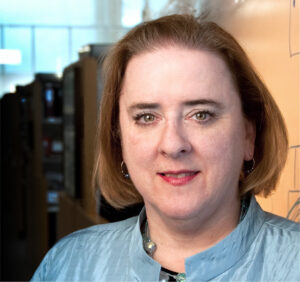
Unlocking mysteries of trait and disease heritability in dogs
2024 Edward Novitski Prize recipient Elaine Ostrander, a pioneer of the domestic dog model, discovered numerous genes affecting dog size, morphology, behavior, and disease susceptibility—many of which have relevance in humans.
-
GSA and collaborators Personal Genetics Education & Dialogue and Reclaiming STEM Institute launch NSF-funded BIO-LEAPS project to support culture change in genetics
We are thrilled to announce that the Genetics Society of America (GSA) is collaborating with the Personal Genetics Education & Dialogue (PGED) based in the Department of Genetics at Harvard Medical School, and the Reclaiming STEM Institute (RSI) on a Leading Culture Change Through Professional Societies of Biology (BIO-LEAPS) grant from the U.S. National Science…
-

Daman Saluja: Navigating Science and Policy in India
In the Paths to Science Policy series, we talk to individuals who have a passion for science policy and are active in advocacy through their various roles and careers. The series aims to inform and guide early career scientists interested in science policy. This series is brought to you by the GSA Early Career Scientist…
-
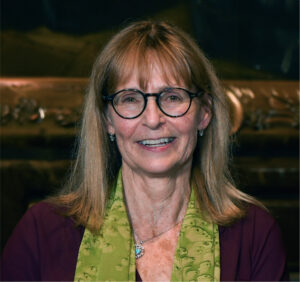
A fly geneticist’s journey into discovering rules of organ development
2024 George W. Beadle Award recipient Deborah Andrew discovered new genes and pathways in Drosophila salivary gland organogenesis. Now, her work can help optimize cell secretion in therapeutic applications and fight malaria.
-
Małgorzata Gazda: How receiving the DeLill Nasser Award helped her land her dream job
Have you ever experienced an event that changes the course of your life, or in this case, your career? Małgorzata (Gosia) Gazda is Assistant Professor at the University of Montreal and in 2022, she received the DeLill Nasser Award for Professional Development in Genetics, which she used to attend and present at the 2022 Population,…
-

Hongyu Zhao joins GENETICS as new Senior Editor
A new senior editor is joining GENETICS in the Statistical Genetics and Genomics section. We’re excited to welcome Hongyu Zhao to the editorial team.
-
GSA Member Julio Molina Pineda Receives DeLill Nasser Award, Shines at TAGC 2024
“At any career stage, the GSA membership is an amazing investment for any genetics professional!” Julio Molina Pineda is a PhD Candidate in Cell and Molecular Biology and a Research Assistant at the University of Arkansas, and a Doctoral Academy Fellow at the Lewis Lab. In 2023, Julio was awarded the DeLill Nasser Award for…
-
In Memoriam: Ellsworth Herman Grell (1932–2023), a pioneer of Drosophila genome engineering and annotation
Ellsworth (Ed) Grell blessed the Drosophila community through three enduring legacies: as a pioneer of chromosome mechanics, as a primary organizer and synthesizer of genetic knowledge in Drosophila, and as a graceful mentor to those fortunate to have known him personally. Ed grew up in rural Nebraska, completed his undergraduate studies at Iowa State, and…
-
Congratulations to the #Fungal24 Poster Award winners!
We are pleased to announce the recipients of the GSA Poster Awards for posters presented at the 32nd Fungal Genetics Conference! Undergraduate and graduate student members of GSA were eligible for the awards, and a hard-working team of judges made the determinations. Congratulations to all! Felicia Ebot Ojong, The University of Georgia My research is focused…
-
Poster presentation tips for TAGC 2024
You’ve been selected to present a poster at The Allied Genetics Conference 2024 in March—you’ve celebrated, made plans to attend, now what? This is an exciting opportunity to showcase your research and engage with fellow members of the genetics community, so you want to make sure you’re prepared. We wanted to offer you some tips…
-

Maximize your TAGC 2024 experience
A guide to all that National Harbor & DC have to offer Are you joining us for The Allied Genetics Conference 2024 in March? Make the most of your #TAGC24 experience in National Harbor! We know the science will keep you busy, but you deserve to unwind and have some fun, so we’ve curated a…
-
Early Career Leadership Spotlight: Sarah Petrosky
We’re taking time to get to know the members of the GSA’s Early Career Scientist Committees. Join us to learn more about our early career scientist advocates. Sarah PetroskyMultimedia SubcommitteeUniversity of Pittsburgh Research Interest I am interested in understanding adaptation that has been happening recently in populations by dissecting the ways that genes underlying an adaptation…
-
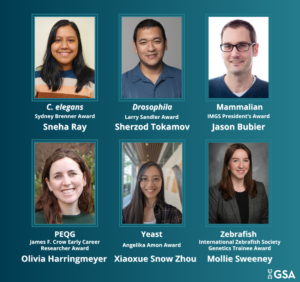
TAGC 2024 Early Career Award Winners
GSA is pleased to announce the winners of the early career awards presented at The Allied Genetics Conference 2024. These awards are specific to particular TAGC communities and recognize early career scientists’ outstanding work on their respective research organisms. The awardees will present their talks in keynote sessions at TAGC 2024. Don’t miss the opportunity…
-
Preeminent geneticists recognized with revamped GSA Awards
In 2022, GSA’s Board of Directors launched an audit to review the five major awards conferred by the Society. Today, we are thrilled to announce the recipients of the reimagined GSA Awards, including the new Genetics Society of America Early Career Medal. The scientists honored this year are recognized by their peers for their outstanding…
-
Fly Board funds outreach programs to spread the word about Drosophila research
In 2020, the Fly Board voted to use part of its reserve fund to support efforts to increase trainee participation as well as equity and diversity in the Drosophila community. An awards committee decides how the money will be spent each year, and from 2020–2022, the committee posted a very broad call for applications from…
-
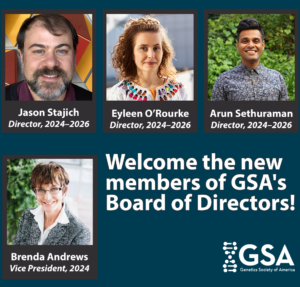
New members of the GSA Board of Directors: 2024–2026
We are pleased to announce the election of four new leaders to the GSA Board of Directors: 2024 Vice President/2025 President Brenda Andrews Professor, University of Toronto It’s an honor to continue my association with the Society by serving as Vice President of the Board of Directors. I have broad knowledge of the ongoing activities…
-

From genome to discovery: a genome alone is not enough
Standardizing how genomes are sequenced, assembled, annotated, and reported on will make them more comparable, reproducible, and reusable for the research community.
-

Early Career Leadership Spotlight: Samuel Isife
We’re taking time to get to know the members of the GSA Early Career Scientist Subcommittees. Join us to learn more about members of the Early Career Leadership Program.
-

What happens when you send a letter to Congress?
Ever wonder what happens after you contact your elected officials? Former AAAS-ASGCT Congressional Policy Fellow in the U.S. House of Representatives, Adriana Bankston walks us through the journey of a congressional advocacy letter and explains how scientists can use their voices to help shape research funding and federal policy.