

This week, Leila Abtahi interviewed Frank Huynh from the University of British Columbia (UBC).
On job applications
Leila: Could you please introduce yourself and your current position at UBC?
Frank: I’m Frank Huynh, Assistant Professor of Teaching in the Department of Cellular and Physiological Sciences at UBC.
Leila: Can you tell us about your career trajectory?
Frank: I got my undergrad at UBC in biochemistry and then did my PhD in physiology at UBC as well. From undergrad, I participated in the co-op program. So instead of four years, my undergrad degree took five years. But in that co-op program, I worked full-time for 16 months straight in research labs before coming back to finish my final year.
I think the undergrad research helped me get into grad school, but also set me up to get scholarship funding right away when I started grad school.
Then in grad school, I was a teaching assistant for the undergrad physiology lab—the same lab I am now running as the course coordinator. I was a TA for five years, which is where I got a lot of teaching experience and realized I wanted to pursue teaching..
I completed UBC’s Instructional Skills Workshop run by the Center for Teaching and Learning and also took Biology 535, which was Teaching and Learning in the Life Sciences, to get even more teaching training.
After graduation, I did my postdoc at Duke University. During my postdoc interview, I made it clear that I wanted to continue teaching, and they were super supportive. I got to work with my postdoc mentor to develop a graduate module introducing students to molecular modeling using Pymol. I also got an adjunct professor job at Elon University. So, while doing my postdoc, I also taught physiology labs at Elon, and thanks to the teaching I did in grad school, I was already familiar with a lot of the topics.
In 2017, I published the big paper that you need to get a faculty position, so I started seriously applying for jobs around that same year. Honestly, I think the thing that got me the most interviews was my teaching experience, which makes sense since I applied to a lot of the teaching-intensive jobs. However, I also applied to some research-intensive jobs as well.
In the first faculty position I got at San Jose State University, the job ad was essentially written for me. They were looking for someone to run a research lab approximately 50% of the time and teach the other 50%, and they needed someone to teach physiology labs. Since I had a strong research background and had been teaching physiology labs for 10 years already, I was a strong candidate for the job. If I didn’t have the teaching experience I had, I don’t think I would have gotten this job. I was at San Jose State for about six years, got tenured, and then came back to Vancouver and started again as an assistant professor of teaching.
Leila: What brings you here? Why UBC?
Frank: My family is here. I love Vancouver; I have over a hundred extended family members here. We were starting to settle in California, and we had already been gone for 13 years and had two kids. But of course, once you stop trying to come back, then all the job opportunities come in. So then my wife and I both got job offers in Vancouver at the same time, and it made sense to come back.
Leila: If you think back 15 years, you were an undergraduate student. Have you always been interested in academia, or did you consider other career paths?
Frank: I think my number one choice was academia because I like the teaching part of it. But you have to be realistic.
In my postdoc, I thought, “There are a million people who graduate with PhDs that have the same credentials, but there’s maybe enough academic jobs for 10% of those people, right?”
So, I did a lot of career exploration and met with people with PhDs to figure out what they were doing with their degrees. There are so many other things you could do. You need to just go out and explore.
I looked at being a medical writer because I’m decent at writing successful grants. I could do it for biotech which pays well in the U.S. I don’t love doing it though. That’s part of the reason why I took my current job, because I don’t have to write as many grants.
I was also looking at investment jobs: big investment firms that invest in life sciences. They want PhD-level scientists to vet the companies that they want to invest in.
I also explored being a Medical Science Liaison for big pharma. I did apply for industry jobs as well and got interviews for them. So, if it didn’t work out in academia, I could at least go work in biotech.
Leila: Have you always been interested in R1, R2, or very research-driven universities, or do you consider other universities as well?
Frank: I considered everything. My target was less than the R1s, but there are a lot of R1s that do have a lot of teaching too. So, I was looking more at R2s, but primarily undergraduate institutions were my main target. I wanted to be at a primarily undergraduate institution with a reasonable research budget, which is really hard to find—they do exist though. I think for me, the hardest part was that my research involves animals. So, a lot of the smaller schools don’t necessarily have a vivarium for mice. I found one that did, nd I was able to do my research there.
Leila: Is any research involved in a teaching position?
Frank: Yes. You don’t have to do research, but you can. At UBC, you’re considered educational leadership faculty. One of the things you can do as your educational leadership is research into teaching methods. However, many other things also count as educational leadership. One thing that I did at my previous job, which is considered educational leadership here at UBC, is identifying and closing achievement gaps in students under-represented in STEM fields. San Jose State University is a minority-serving institution with a majority of students identifying as either Hispanic or Asian. There are also a lot of first-generation students and lower-income students. We tried really hard to make sure that these students who are under-represented in STEM were not falling behind. The California State University system, which we were part of, provides faculty with aggregated demographic data that allowed us to identify achievement gaps. When we found gaps, we were able to make changes to help students stay on track for graduation. For example, we wanted to decrease our six-year graduation rate and increase our four-year graduation rate and one way we were able to do this was by enhancing our advising practices and modifying some course prerequisites. When we saw that there were certain groups that were not achieving as well as others, we addressed these issues right away.
Leila: In the process of your application, how long did it take for you to start preparing your application material to land an academic faculty position?
Frank: That’s essentially a second full-time job.
I would work nine to five, go home and then work again from nine to one or two a.m. on applications.
I have my folder of job applications. I must have applied to 70 or more jobs in academia, non-academia, everything.I tailored every single material to exactly what they wanted in their job ad.
If you have the skill or experience, put it in your application as clearly as you possibly can. If they say they want physiology teaching, use the words physiology teaching. If you don’t have the experience, use whatever words sound as similar as possible to that, just to let them know that you have similar experience. It wasn’t like I re-did my entire application materials, but, especially in the cover letter, I did a lot of customizing.
I also had different CVs, one for research-intensive jobs, one for teaching-intensive jobs. And then it’s very common to also need a teaching statement on top of that. And a lot of places also require diversity statements.
Leila: Do you also need a teaching portfolio?
Frank: Yes, and when I took the teaching and learning in the life sciences class in grad school I made one, so I already had it.
You should have a portfolio, especially for a teaching-intensive job. I even sent my teaching portfolio to jobs that didn’t even request one, just to show them I was serious and experienced.
Leila: You were looking for jobs that are related to your experiences and interests. Where did you find those jobs?
Frank: I used the Chronicle of Higher Education (https://www.chronicle.com), or HigherEdJobs (https://www.higheredjobs.com)—these are academia-specific websites.
I think Canada’s got one, the Canadian Association of University Teachers; they also have job boards, so I got Canadian job postings from there, and then also used job boards at major journals like Nature, Cell, and Science. I put my keywords in there and signed up for alerts, so if anything pops up, you’ll see it.
On interviews
Leila: And in your interviews, what advice would you give applicants regarding the first-round interviews the remote ones?
Frank: Know yourself really well, because a lot of times they’re going to ask you questions that you have the experience for, but won’t remember in the moment. Then afterward, you’ll think, “I wish I had said that!” So look your CV up and down, remember your experiences, and have examples for everything.
Immediately after the interview, write down everything. All of those questions will come up again. So, on the next interview, you’ll have the last interview’s questions to study from.
And yeah, don’t underestimate the tell us about yourself question. Because you’re going to get that. Always have something positive to say about yourself. Have a good elevator pitch for yourself to go right away!
Leila: What helped you prepare for your job talk and chalk talk?
Frank: I did a lot of practice runs with people like my postdoc advisor.
I also sent materials to previous postdocs that I worked with here who are now faculty at other places. It’s so important to get a lot of feedback from other people because you’re going to have a lot of different eyes on your application materials. A lot of different people are going to see your interviews.
Leila: So, even for a teaching professor position, you got a lot of questions about your research background?
Frank: So, for this particular job (UBC, teaching professor), I didn’t. But they did make me do a chalk talk in which they asked me to come up with a lab that we could teach in the physiology lab that they wanted me to run. In my previous job, because it was research and teaching, I did a research talk and a teaching talk. The research talk was a seminar and asked questions about your research. For the teaching one, they gave you a topic to teach, and you had to come up with a 30-minute lecture on that topic.
If you are asked to do a teaching demonstration, I would recommend not doing your traditional lecture. Make sure to show what kinds of non-traditional methods you would use in your classroom to help yourself stand out.
I think for my first teaching demonstration, I asked people to download an app on their phone to measure their heart rate as we discussed how the orthostatic response works. Participants were also able to use their phones to answer multiple-choice questions, and then they could see the results live on the screen!I think interactive presentations are really important. You don’t want to go and just do your traditional lecture. I don’t think that cuts it anymore for a solid teaching position.
Leila: During your interviews, do you remember any common questions you got?
Frank: For teaching-only positions, I got a lot of questions along the lines of, “Are you going to miss the research?” When I’m doing my educational leadership here, I still get to do research projects. I can work with students and do directed studies; so, I didn’t feel like I was giving it up entirely.
Other, more general ones would be like “Why do you want to come here?” They are looking to see if you’re going to stay. When I got my job in San Jose, they literally told me, “We hope that if we hire you that you’re going to stay here for 30 years.”
You need to do your homework about the area, and you really need to ask yourself why you want to relocate there. The places I applied to were not just places that had jobs that suited me; I had to ask myself, “Can I see myself living here?”
On your transition to your current faculty role
Leila: Can you describe a day in your life, in your current role?
Frank: Last year, I was teaching something new. I had to learn all the material, even though some of it was passed down to me.
It was harder at UBC because each class is only 50 minutes, three times a week. I had to plan out lectures that covered all the material but also included activities during the short class times. I felt like I was constantly behind in preparing lectures. Having ample time and help (TAs) make preparing a lot easier.
Leila: What would you do more or less as a graduate or postdoc to help navigate this path better?
Frank: Network.
Leila: How do you network?
Frank: I don’t love doing it, but it’s so important.
When you go to conferences, look up places that you want to work at. Where do you want to move to? What PIs do you want to work with? Which universities? And just go to all their posters, meet all those people, try to find the PI. Even if you don’t meet the PI, if you meet the grad students, that’s great too. Just meet as many people as possible. Go to all those networking events that a lot of conferences set up for this purpose. I got postdoc offers just by talking to PIs. So, network, especially if you want to do industry or biotech. It’s so hard to get that first foot in the door.
When you approach people at conferences, just ask them, “Can I buy you a coffee? Can I hear what you do at your job? Because I’m very interested!”
One time, there was a sales rep from a company that I bought a lot of ELISA from. I made pretty good friends with them. Then, he was at a different meeting talking to someone else, and the person they were talking to said, “Hey, I’m looking for someone who does this.” And he was like, “Yeah, I know a guy who does this.“ and connected us. I got three phone interviews from that interaction.
You never know, but the people that you meet—eventually someone will think of you and recommend you.
Leila: How do you start a conversation with someone you don’t know?
Frank: Start by asking who they are and listen to their story. How did they get to where they are? The people that you meet, sometimes they are in a field that maybe you don’t want to go into, and that’s fine. Just listen to how they got into their field and learn from that; maybe they will change your mind about your own trajectory or you just move on to the next person.

Read more in
-

Thank you, GSA community!
Thank you for being a member of the Genetics Society of America! As GSA’s current president, I am writing to tell you about Society projects and initiatives that we hope you will find useful in advancing your science and your career. Scientific research is a collaborative and exciting endeavor. Scientific societies like GSA exist to…
-

Where are they now? Rosalind Franklin Young Investigator Award recipients share updates on their research
Rosalind Franklin Young Investigator Award applications are open–make sure you submit your application or nomination of a colleague by September 30, 2024.
-

University of Minnesota researchers map genome of the last living wild horse species
The study, published in G3: Genes|Genomes|Genetics, is part of larger conservation efforts to save Przewalski’s horse.
-

Congratulations to the Spring 2024 DeLill Nasser Awardees!
GSA is pleased to announce the recipients of the DeLill Nasser Award for Professional Development in Genetics for Spring 2024! Given twice a year to graduate students and postdoctoral researchers, DeLill Nasser Awards support attendance at meetings and laboratory courses. The award is named in honor of DeLill Nasser, a long-time GSA supporter and National Science Foundation…
-

Carolyn Damilola: an NFS Rising Scientist on a lifelong quest to learn more
Carolyn Damilola is an NFS Rising Scientist from Nigeria doing respiratory system research and paving the way for scientists from underrepresented communities through mentorship.
-
What does a good microgrant proposal look like?
Members of the Microgrant Review Committee share their tips for a successful proposal.
-

The first piece of the facial recognition puzzle
New research in GENETICS gives a first peek at the molecular pathway involved in recognizing faces.
-

New Senior Editor Amy MacQueen joins GENETICS
A new senior editor is joining GENETICS in the Genome Integrity and Transmission section. We’re excited to welcome Amy MacQueen to the editorial team.
-

Block party on the zebrafish sex chromosome
Research in G3 identifies a gene regulatory block of the zebrafish genome responsible for overseeing the maternal-to-zygotic-transition.
-

Unraveling the mysteries of duckweed: epigenetic insights from Spirodela polyrhiza
Research published in G3 offers insight into the impact of DNA methylation on clonal propagation in asexually reproducing plants.
-

A microbiologist’s quest to understand CRISPR in bacterial self-defense
2024 Genetics Society of America Medal recipient Luciano Marraffini determined how CRISPR-Cas systems destroy genetic targets with precision, paving the way for gene editing technology development.
-
Unlocking mysteries of trait and disease heritability in dogs
2024 Edward Novitski Prize recipient Elaine Ostrander, a pioneer of the domestic dog model, discovered numerous genes affecting dog size, morphology, behavior, and disease susceptibility—many of which have relevance in humans.
-

GSA and collaborators Personal Genetics Education & Dialogue and Reclaiming STEM Institute launch NSF-funded BIO-LEAPS project to support culture change in genetics
We are thrilled to announce that the Genetics Society of America (GSA) is collaborating with the Personal Genetics Education & Dialogue (PGED) based in the Department of Genetics at Harvard Medical School, and the Reclaiming STEM Institute (RSI) on a Leading Culture Change Through Professional Societies of Biology (BIO-LEAPS) grant from the U.S. National Science…
-

Daman Saluja: Navigating Science and Policy in India
In the Paths to Science Policy series, we talk to individuals who have a passion for science policy and are active in advocacy through their various roles and careers. The series aims to inform and guide early career scientists interested in science policy. This series is brought to you by the GSA Early Career Scientist…
-
A fly geneticist’s journey into discovering rules of organ development
2024 George W. Beadle Award recipient Deborah Andrew discovered new genes and pathways in Drosophila salivary gland organogenesis. Now, her work can help optimize cell secretion in therapeutic applications and fight malaria.
-
Małgorzata Gazda: How receiving the DeLill Nasser Award helped her land her dream job
Have you ever experienced an event that changes the course of your life, or in this case, your career? Małgorzata (Gosia) Gazda is Assistant Professor at the University of Montreal and in 2022, she received the DeLill Nasser Award for Professional Development in Genetics, which she used to attend and present at the 2022 Population,…
-
Hongyu Zhao joins GENETICS as new Senior Editor
A new senior editor is joining GENETICS in the Statistical Genetics and Genomics section. We’re excited to welcome Hongyu Zhao to the editorial team.
-
GSA Member Julio Molina Pineda Receives DeLill Nasser Award, Shines at TAGC 2024
“At any career stage, the GSA membership is an amazing investment for any genetics professional!” Julio Molina Pineda is a PhD Candidate in Cell and Molecular Biology and a Research Assistant at the University of Arkansas, and a Doctoral Academy Fellow at the Lewis Lab. In 2023, Julio was awarded the DeLill Nasser Award for…
-
In Memoriam: Ellsworth Herman Grell (1932–2023), a pioneer of Drosophila genome engineering and annotation
Ellsworth (Ed) Grell blessed the Drosophila community through three enduring legacies: as a pioneer of chromosome mechanics, as a primary organizer and synthesizer of genetic knowledge in Drosophila, and as a graceful mentor to those fortunate to have known him personally. Ed grew up in rural Nebraska, completed his undergraduate studies at Iowa State, and…
-
Congratulations to the #Fungal24 Poster Award winners!
We are pleased to announce the recipients of the GSA Poster Awards for posters presented at the 32nd Fungal Genetics Conference! Undergraduate and graduate student members of GSA were eligible for the awards, and a hard-working team of judges made the determinations. Congratulations to all! Felicia Ebot Ojong, The University of Georgia My research is focused…
-
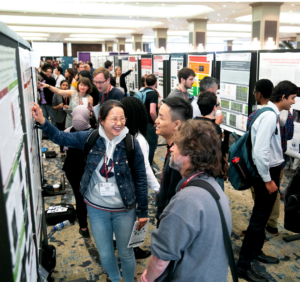
Poster presentation tips for TAGC 2024
You’ve been selected to present a poster at The Allied Genetics Conference 2024 in March—you’ve celebrated, made plans to attend, now what? This is an exciting opportunity to showcase your research and engage with fellow members of the genetics community, so you want to make sure you’re prepared. We wanted to offer you some tips…
-

Maximize your TAGC 2024 experience
A guide to all that National Harbor & DC have to offer Are you joining us for The Allied Genetics Conference 2024 in March? Make the most of your #TAGC24 experience in National Harbor! We know the science will keep you busy, but you deserve to unwind and have some fun, so we’ve curated a…
-
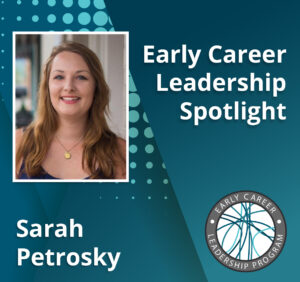
Early Career Leadership Spotlight: Sarah Petrosky
We’re taking time to get to know the members of the GSA’s Early Career Scientist Committees. Join us to learn more about our early career scientist advocates. Sarah PetroskyMultimedia SubcommitteeUniversity of Pittsburgh Research Interest I am interested in understanding adaptation that has been happening recently in populations by dissecting the ways that genes underlying an adaptation…
-
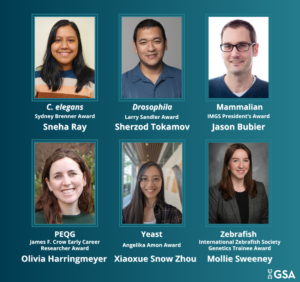
TAGC 2024 Early Career Award Winners
GSA is pleased to announce the winners of the early career awards presented at The Allied Genetics Conference 2024. These awards are specific to particular TAGC communities and recognize early career scientists’ outstanding work on their respective research organisms. The awardees will present their talks in keynote sessions at TAGC 2024. Don’t miss the opportunity…
-
Preeminent geneticists recognized with revamped GSA Awards
In 2022, GSA’s Board of Directors launched an audit to review the five major awards conferred by the Society. Today, we are thrilled to announce the recipients of the reimagined GSA Awards, including the new Genetics Society of America Early Career Medal. The scientists honored this year are recognized by their peers for their outstanding…
-
Fly Board funds outreach programs to spread the word about Drosophila research
In 2020, the Fly Board voted to use part of its reserve fund to support efforts to increase trainee participation as well as equity and diversity in the Drosophila community. An awards committee decides how the money will be spent each year, and from 2020–2022, the committee posted a very broad call for applications from…
-
New members of the GSA Board of Directors: 2024–2026
We are pleased to announce the election of four new leaders to the GSA Board of Directors: 2024 Vice President/2025 President Brenda Andrews Professor, University of Toronto It’s an honor to continue my association with the Society by serving as Vice President of the Board of Directors. I have broad knowledge of the ongoing activities…
-

Early Career Leadership Spotlight: Bahaar Chawla
We’re taking time to get to know the members of the GSA Early Career Scientist Subcommittees. Join us to learn more about members of the Early Career Leadership Program.
-

GSA’s public comment to OMB on the proposed rule “Regulation for Federal Financial Assistance”
GSA shared serious concerns regarding the proposed changes to Uniform Guidance, which, if enacted, will irrevocably damage scientific integrity, progress, and the strength of the U.S. research enterprise.
-

Lost in translation: Finding genetic differences with greater confidence
Researchers benchmark widely used variant-calling tools to improve the accuracy of genomic analyses in laboratory mice