

Today's guest post was contributed by Debraj Manna, a postdoctoral researcher and science writer at the Indian Institute of Science in Bangalore, India. Besides his research in non-canonical translation, Debraj is interested in decoding complex scientific discoveries into compelling narratives. He is committed to sharing the stories behind scientific advancements while shedding light on the lives of researchers. You can connect with Debraj on X, LinkedIn, or Bluesky.
The Fungal Genetics and Genomics Series, published in the GSA Journals, brings together work that spans molecular mechanisms, evolutionary insights, quantitative genetics, and applied genomics across the fungal kingdom. As the community prepares for the upcoming 33rd Fungal Genetics Conference, this collection offers a timely reminder of how fungal systems continue to illuminate fundamental biology while driving translational innovation.
Two recent papers in the collection, one in GENETICS and one in G3: Genes|Genomes|Genetics, underscore that breadth.
In GENETICS, Juxiu Chen et al. dissect the role of the Essential 1 (Ess1) protein, a budding yeast ortholog of human PIN1, in telomere biology. PIN1 is well known for modulating telomere maintenance in humans through Telomeric Repeat Binding Factor 1 (TRF1). In Saccharomyces cerevisiae, however, Ess1 operates through a mechanistically distinct pathway. The authors demonstrated that Ess1 is vital for efficient RNA polymerase II transcription termination, repressing TERRA (telomeric repeat-containing RNA), and preventing the accumulation of telomeric R-loops.
Strikingly, Ess1 does more than regulate transcription. It associates directly with telomeric DNA to promote telomere-end resection. Working in concert with the MRX (Mre11-Rad50-Xrs2) complex, Ess1 facilitates both telomerase-mediated elongation and recombination-dependent survival pathways. When Ess1 is depleted, telomeres shorten, and telomerase-deficient cells undergo accelerated senescence. By functionally linking RNA polymerase II dynamics to telomere processing, this study reveals how a conserved prolyl isomerase (Ess1/PIN1) family coordinates transcriptional control and chromosome-end maintenance to safeguard genome stability across eukaryotes.
A second study published in G3 turns to a very different fungal system: the edible mushroom Lentinula edodes. Xia Zhao et al. provide a transcriptomic roadmap of pileus development, shifting the emphasis away from the traditionally studied stipe elongation stage. Using RNA sequencing across three developmental phases, the team identified 283 conserved, differentially expressed genes that define cap morphogenesis.
Among these, three candidates stand out. Alpha-amylase (α-Amy) likely drives rapid cap expansion by mobilizing glucose reserves. Phosphatidylserine decarboxylase (Psd) supports autophagy via key lipid conversions, and Heat shock protein 70 (HSP70) maintains proteostasis by facilitating the degradation of ubiquitinated protein aggregates. Together, these processes suggest a coordinated reallocation of metabolic and proteostatic resources during maturation. Complementary physiological data—most notably, a pronounced increase in superoxide dismutase activity at maturity—support the idea that cap opening is coupled to a programmed aging trajectory. Beyond developmental insight, this dataset provides actionable targets for molecular breeding of high-quality cultivars.
From chromosome ends in budding yeast to cap architecture in basidiomycetes, these studies exemplify the intellectual range of the Fungal Genetics and Genomics Series. As the field gathers at Fungal 2026 next month, such work highlights why fungal systems remain indispensable for connecting mechanism, evolution, and application in modern genetics.
References
The Ess1 prolyl isomerase represses TERRA transcription and promotes telomere replication in Saccharomyces cerevisiae
Chen J, Yang L, Zhu X, et al. GENETICS. January 2026.Identification of Regulatory Candidate Genes for Lentinula edodes Pileus Development Based on Transcriptome Analysis
Zhao X, Wu CY, You H, et al. G3: Genes | Genomes | Genetics. January 2026.

Guest posts are contributed by members of our community. The views expressed in guest posts are those of the author(s) and are not necessarily endorsed by the Genetics Society of America. If you'd like to write a guest post, e-mail communications@genetics-gsa.org.
View all posts by Guest Author »Read more in
-

Thank you, GSA community!
Thank you for being a member of the Genetics Society of America! As GSA’s current president, I am writing to tell you about Society projects and initiatives that we hope you will find useful in advancing your science and your career. Scientific research is a collaborative and exciting endeavor. Scientific societies like GSA exist to…
-

Where are they now? Rosalind Franklin Young Investigator Award recipients share updates on their research
Rosalind Franklin Young Investigator Award applications are open–make sure you submit your application or nomination of a colleague by September 30, 2024.
-

University of Minnesota researchers map genome of the last living wild horse species
The study, published in G3: Genes|Genomes|Genetics, is part of larger conservation efforts to save Przewalski’s horse.
-

Congratulations to the Spring 2024 DeLill Nasser Awardees!
GSA is pleased to announce the recipients of the DeLill Nasser Award for Professional Development in Genetics for Spring 2024! Given twice a year to graduate students and postdoctoral researchers, DeLill Nasser Awards support attendance at meetings and laboratory courses. The award is named in honor of DeLill Nasser, a long-time GSA supporter and National Science Foundation…
-

Carolyn Damilola: an NFS Rising Scientist on a lifelong quest to learn more
Carolyn Damilola is an NFS Rising Scientist from Nigeria doing respiratory system research and paving the way for scientists from underrepresented communities through mentorship.
-
What does a good microgrant proposal look like?
Members of the Microgrant Review Committee share their tips for a successful proposal.
-

The first piece of the facial recognition puzzle
New research in GENETICS gives a first peek at the molecular pathway involved in recognizing faces.
-

New Senior Editor Amy MacQueen joins GENETICS
A new senior editor is joining GENETICS in the Genome Integrity and Transmission section. We’re excited to welcome Amy MacQueen to the editorial team.
-

Block party on the zebrafish sex chromosome
Research in G3 identifies a gene regulatory block of the zebrafish genome responsible for overseeing the maternal-to-zygotic-transition.
-

Unraveling the mysteries of duckweed: epigenetic insights from Spirodela polyrhiza
Research published in G3 offers insight into the impact of DNA methylation on clonal propagation in asexually reproducing plants.
-

A microbiologist’s quest to understand CRISPR in bacterial self-defense
2024 Genetics Society of America Medal recipient Luciano Marraffini determined how CRISPR-Cas systems destroy genetic targets with precision, paving the way for gene editing technology development.
-

Unlocking mysteries of trait and disease heritability in dogs
2024 Edward Novitski Prize recipient Elaine Ostrander, a pioneer of the domestic dog model, discovered numerous genes affecting dog size, morphology, behavior, and disease susceptibility—many of which have relevance in humans.
-
GSA and collaborators Personal Genetics Education & Dialogue and Reclaiming STEM Institute launch NSF-funded BIO-LEAPS project to support culture change in genetics
We are thrilled to announce that the Genetics Society of America (GSA) is collaborating with the Personal Genetics Education & Dialogue (PGED) based in the Department of Genetics at Harvard Medical School, and the Reclaiming STEM Institute (RSI) on a Leading Culture Change Through Professional Societies of Biology (BIO-LEAPS) grant from the U.S. National Science…
-

Daman Saluja: Navigating Science and Policy in India
In the Paths to Science Policy series, we talk to individuals who have a passion for science policy and are active in advocacy through their various roles and careers. The series aims to inform and guide early career scientists interested in science policy. This series is brought to you by the GSA Early Career Scientist…
-

A fly geneticist’s journey into discovering rules of organ development
2024 George W. Beadle Award recipient Deborah Andrew discovered new genes and pathways in Drosophila salivary gland organogenesis. Now, her work can help optimize cell secretion in therapeutic applications and fight malaria.
-

Małgorzata Gazda: How receiving the DeLill Nasser Award helped her land her dream job
Have you ever experienced an event that changes the course of your life, or in this case, your career? Małgorzata (Gosia) Gazda is Assistant Professor at the University of Montreal and in 2022, she received the DeLill Nasser Award for Professional Development in Genetics, which she used to attend and present at the 2022 Population,…
-

Hongyu Zhao joins GENETICS as new Senior Editor
A new senior editor is joining GENETICS in the Statistical Genetics and Genomics section. We’re excited to welcome Hongyu Zhao to the editorial team.
-
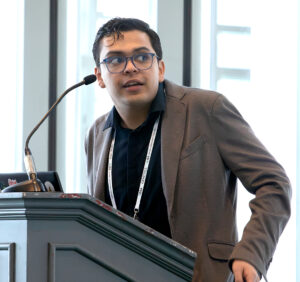
GSA Member Julio Molina Pineda Receives DeLill Nasser Award, Shines at TAGC 2024
“At any career stage, the GSA membership is an amazing investment for any genetics professional!” Julio Molina Pineda is a PhD Candidate in Cell and Molecular Biology and a Research Assistant at the University of Arkansas, and a Doctoral Academy Fellow at the Lewis Lab. In 2023, Julio was awarded the DeLill Nasser Award for…
-
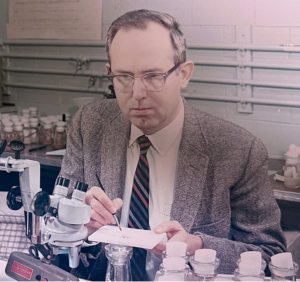
In Memoriam: Ellsworth Herman Grell (1932–2023), a pioneer of Drosophila genome engineering and annotation
Ellsworth (Ed) Grell blessed the Drosophila community through three enduring legacies: as a pioneer of chromosome mechanics, as a primary organizer and synthesizer of genetic knowledge in Drosophila, and as a graceful mentor to those fortunate to have known him personally. Ed grew up in rural Nebraska, completed his undergraduate studies at Iowa State, and…
-

Congratulations to the #Fungal24 Poster Award winners!
We are pleased to announce the recipients of the GSA Poster Awards for posters presented at the 32nd Fungal Genetics Conference! Undergraduate and graduate student members of GSA were eligible for the awards, and a hard-working team of judges made the determinations. Congratulations to all! Felicia Ebot Ojong, The University of Georgia My research is focused…
-
Poster presentation tips for TAGC 2024
You’ve been selected to present a poster at The Allied Genetics Conference 2024 in March—you’ve celebrated, made plans to attend, now what? This is an exciting opportunity to showcase your research and engage with fellow members of the genetics community, so you want to make sure you’re prepared. We wanted to offer you some tips…
-

Maximize your TAGC 2024 experience
A guide to all that National Harbor & DC have to offer Are you joining us for The Allied Genetics Conference 2024 in March? Make the most of your #TAGC24 experience in National Harbor! We know the science will keep you busy, but you deserve to unwind and have some fun, so we’ve curated a…
-
Early Career Leadership Spotlight: Sarah Petrosky
We’re taking time to get to know the members of the GSA’s Early Career Scientist Committees. Join us to learn more about our early career scientist advocates. Sarah PetroskyMultimedia SubcommitteeUniversity of Pittsburgh Research Interest I am interested in understanding adaptation that has been happening recently in populations by dissecting the ways that genes underlying an adaptation…
-
TAGC 2024 Early Career Award Winners
GSA is pleased to announce the winners of the early career awards presented at The Allied Genetics Conference 2024. These awards are specific to particular TAGC communities and recognize early career scientists’ outstanding work on their respective research organisms. The awardees will present their talks in keynote sessions at TAGC 2024. Don’t miss the opportunity…
-

Preeminent geneticists recognized with revamped GSA Awards
In 2022, GSA’s Board of Directors launched an audit to review the five major awards conferred by the Society. Today, we are thrilled to announce the recipients of the reimagined GSA Awards, including the new Genetics Society of America Early Career Medal. The scientists honored this year are recognized by their peers for their outstanding…
-
Fly Board funds outreach programs to spread the word about Drosophila research
In 2020, the Fly Board voted to use part of its reserve fund to support efforts to increase trainee participation as well as equity and diversity in the Drosophila community. An awards committee decides how the money will be spent each year, and from 2020–2022, the committee posted a very broad call for applications from…
-
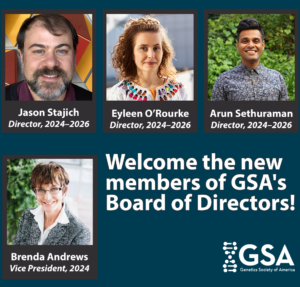
New members of the GSA Board of Directors: 2024–2026
We are pleased to announce the election of four new leaders to the GSA Board of Directors: 2024 Vice President/2025 President Brenda Andrews Professor, University of Toronto It’s an honor to continue my association with the Society by serving as Vice President of the Board of Directors. I have broad knowledge of the ongoing activities…
-

Research funding roadmap: How policy debates are impacting today’s funding model
The previous post in this two-part series focused on the United State’s current research funding model and the history behind it—but today, we’re facing policy debates that may radically change this long-standing process. In the last two years, the U.S. federal administration has pushed for changes to how federal funds are allocated and used. A…
-

Research funding roadmap: The route to today’s model
Research funding today is complicated. Much of that complexity traces back to World War II, which reshaped who pays for science. Prior to the war, most research funding came from philanthropic donations and government labs. Depending on the donor, funds were used for a new building or to support a specific researcher. For instance, Thomas…
-

Anatomy of an R01 Grant
If you work in a lab that receives funding from the U.S. federal government, chances are that you’ve heard the term “R01” (pronounced “R – OH – 1”). An R01 is one of the many grant types awarded by the National Institutes of Health (NIH). The R series, or Research Grant, is the most common…