

This week, Madhulika Rai of the Early Career Scientist Career Development Subcommittee interviewed Ben Vincent from California State University, Los Angeles for our “Landing a faculty position” series.
Madhulika: Can you briefly describe your career trajectory?
Ben: I started my journey in science in graduate school. I got my PhD in genetics and genomics from Harvard Medical School. I did my PhD with Angela Pace in the Department of Systems Biology from 2011 to 2017. In 2017, I accepted a postdoc position at the University of Pittsburgh, in the lab of Mark Rebeiz, where I studied evolution and developmental biology until 2023. I entered the job market three times—in three cycles: 2021, 2022, and 2023. In 2023, I started as an assistant professor of biological sciences at California State University, Los Angeles. That’s where I now teach and have my lab.
Madhulika: How long did it take, since you went through certain cycles, from starting off preparing application materials to actually landing the academic position?
Ben: The brief answer is three and a half years. I mentioned I entered the job market three times. The first time was in 2020, right in the middle of the pandemic and I didn’t think I was ready at that time. I think I had been in my postdoc for about three to four years at that point. Even though I didn’t think I was ready, my postdoc advisor encouraged me to just put myself out there with what I had, just to see what was going on, especially because there was a lot of uncertainty around that time due to the pandemic.
Writing up the application materials, research statement, teaching statement, diversity statement, all those things and getting them edited probably took me around six months in total—including the thinking time. I feel like people undervalue how much time it takes to just think about things and organize them in your head. The actual writing probably took me about a month, but the brainstorming and refining took the other five.
In that first cycle, I did end up getting a job offer from Texas A&M International University in Laredo, but it didn’t seem like it would be a good fit for me and my then-partner, now fiancé, in terms of where we wanted to live. So even though I got the offer, I turned it down.
I went on the job market a second time the following year and got no second-round interviews. I think I got a couple of Zoom interviews, but nothing progressed beyond that.
Then came the third round, which I had decided would be my last. I figured if the academic job cycle didn’t work out this time, I’d probably move on to something else. That was the round that ended up working out for me. I had a Zoom interview, followed by a virtual interview process at Cal State LA. They offered me the job,and after flying out to LA to make sure it was the place I wanted to be, I accepted.
Madhulika: While you were applying, did you always aim for places like Cal State LA, or were you also applying to R1 universities and other academic institutions?
Ben: I cast a pretty broad net. Going into my postdoc and thinking about an academic career, my ideal position was one that balanced teaching and research, roughly 50/50. I felt well-suited for schools like R2s and primarily undergraduate institutions. I had some teaching experience, which helped support those applications. I was the instructor of records for an undergraduate biology course at the University of Pittsburgh, and without that experience, I think a lot of the schools I was targeting wouldn’t have considered me seriously. They have a pretty strict requirement of an instructor of records on at least one course. I kind of fulfilled the bare minimum. But in addition to those, I applied to R1 universities, though I didn’t get a lot of interest from those schools since my postdoc paper was never published.
Madhulika: What were your pointers to tailor your application material?
Ben: I had two versions of most documents, so two versions of a teaching statement, two versions of a research statement, and two of a diversity statement, which depended on what the schools were looking for. For R2s and primarily undergrad universities, I always used the two-page teaching statement which went more in-depth about my qualifications and my teaching philosophy. For research statements, most places require a three-page statement. Having these two versions did enough to cover a bunch of different types of schools. Unfortunately, not super successfully, but it was the amount that I could manage while maintaining my own mental health. I wasn’t going to write a new application for every single school, it’s impossible. And I also didn’t write a cover letter from scratch for each individual school. I treated that like a Mad Lib and tried to add some more personal sentences here and there that telegraphed my interest in each individual place, to basically convince them that I knew what their school was and I cared.
Madhulika: While working on your job application, where did you get help from?
Ben: I was really lucky to have very supportive PIs at my postdoc institution in our Department of Biological Sciences. I was able to make connections with faculty, get to know them, both formally and informally. They were willing to read my materials and give me a fair amount of feedback on them. I participated in a faculty application workshop, my fellow postdoc started and received invaluable feedback from different perspectives. I combined that with more informal feedback by emailing faculties one-on-one.
Madhulika: Can you share some resources, like websites and workshops, that are specifically helpful in preparing application materials and/or looking for open positions?
Ben: The main resource that I used was the faculty application workshop. I checked out the main job posting boards like Science Careers, Nature Jobs, the Chronicle of Higher Education, academic jobs online, and other common sites. Because I had other faculty, or other postdocs that were applying at the same time as me, we were able to help each other out. If I saw a posting that I thought people should apply to, I just sent it to them. That’s very friendly and collaborative. I think it’s easy for people to say, “these people are my direct competition and I don’t want to do anything to help them out,” but in reality, I don’t think anyone is really your direct competition because departments are looking for such specific candidates. It’s impossible to anticipate exactly what they’re looking for.. You should just cast as wide a net as possible, but it’s very difficult to do that on your own. Everyone’s got their very different constellation of skills that’s gonna shine through an application and it’s completely impossible to predict what anyone is looking for.
On interviews
Madhulika: What advice would you give applicants regarding the first round of interviews?
Ben: Most interviews today are remote, and I found them challenging. My advice is to take a step back and think abstractly about what interviewers are really looking for. As scientists, we often approach interviews like oral exams.That’s the kind of evaluation we’ve been trained for: PhD qualifying exams, committee defenses, those high-pressure moments we’ve learned to “survive” by giving the right answers. So, we tend to prepare as if interviews will be full of probing, hyper-specific questions that we need to answer perfectly to succeed, and try to nail the questions with the factual information that we have. But in reality, that’s not what an interview is about. An interview at its core is a conversation between two people, a conversation that is inevitably a bit awkward because meeting someone new always is. The interviewer isn’t looking for a flawless performance; they’re looking for an interaction that feels natural, pleasant, and not exhausting. In other words, your goal isn’t to deliver perfect answers but to make the experience of talking with you as friendly as possible, maybe have a couple of talking points on what you want to communicate about yourself, but keep it natural. That’s my main piece of advice.
Madhulika: Did you get any practice or help that prepared you better for your job talk?
Ben: Yeah, I do have some recordings. I don’t have a recording of my actual job talk, but I do have one from my exit postdoc seminar, which I very deliberately designed to be the same, word for word, as my job talk. So, I’m happy to share that. I never had to do a chalk talk for any of my interviews though. That part really varies depending on the type of institution. R2s and primarily teaching-focused universities tend to handle that differently from R1s, and even within those categories, it can vary a lot from school to school. In my case, for the two job offers I ended up getting over that three-year period, neither required a chalk talk. Since they were both teaching-and-research-focused institutions, the job talk basically served as both, the formal presentation and the chalk talk rolled into one.
Madhulika: As a part of the interview process, were you given a class to teach on the spot?
Ben: Nope. I think it also had to do with the fact that both of my interview experiences were remote.These days, that’s not as broadly useful because most second-round interviews are in person. But for me, the constraints of running a virtual process meant that things like more intensive teaching demos or chalk talks weren’t part of the process in those years.
I gave multiple practice job talks throughout the process that evolved over time and I’m very proud of the final version even if a bit unconventional for a job talk. The schools I interviewed at asked for a talk undergraduates could easily understand and I ended up framing my talk around a Taylor Swift song I really liked with the lyrics mirroring my scientific journey. I followed the “story” of the song over about 50 minutes with my own scientific story, and at the end, I synthesized it into my own philosophy of science communication. It was a bit of a meta-narrative, reciting lyrics in a poetic way to structure the talk, and it was a big risk but I’m glad I took it. In a way, it helped filter for places that were a good fit. Not everyone could or should give a talk like that, but I’m proud of what I did. In fact, the reason I got the job was because the undergrads liked my talk the most. It resonated with them.
Madhulika: During your interviews, did the discussions ever move into more personal territory, or did they stay strictly professional?
Ben: I don’t think that I was asked anything about my personal life, from what I remember. I’m a gay white man—that is my identity. It’s possible that if I offer that information naturally I respond to other questions. We talked about relocation in general and I offered the fact that I had a fiancé who was willing to move with me. In retrospect, when I shared that information, it was honest, and probably showed that I was somewhat flexible. Do I think people should have to do that in order to get these types of jobs? No.
Madhulika: Were questions about your background and ethnicity asked during the process?
Ben: I don’t remember any required questions about my identity. I recall optional identity questions, especially regarding race and ethnicity. They were the usual boilerplate items, such as whether you identify as Hispanic or Latino, along with a few other optional demographic questions.
On transition to the current role.
Madhulika: Could you briefly describe what a typical day looks like for you in your current role and how you balance all your responsibilities?
Ben: I’m an assistant professor in a school that focuses on undergraduate teaching. From my first semester, I was teaching a class and that first semester was a large-ish lecture class, so from the start, I had basically a week of orientation. There is little to no formal teaching instruction and a week after I started this job, I was in front of 80 students talking about genetics for a class. It was intense, but I had been preparing to do it for a very long time. It was stressful, but fun, because that’s the part of the job that I gravitate toward anyway. For the first semester I focused primarily on teaching, and I was getting my lab up and running. I recruited some undergraduate students from this class that I was teaching, to work in my lab, and as the semesters have gone on, my teaching responsibilities have increased. Next spring, I’ll be teaching three classes at once. The lab kind of took a backseat to teaching for that first semester, and now it’s caught up as I recruit more students.
In terms of a day in life, what I’ve learned is that it can be really unpredictable. You know your teaching schedule, and you try to build a plan around that—I’ll wake up, know what I’ve got to teach, and map out a bunch of things I want to get done. And honestly, maybe 60 to 70% of the time it works out. But the rest of the time? Whatever I thought I was going to do just gets tossed out the window. I’ll run into someone and end up having a long conversation, or a student suddenly needs advice, or something in the lab blows up and I have to go deal with it. It can feel pretty chaotic. And I think people react to that differently. I tend to be a little bit more on the adaptable side, also more on the disorganized side. I like the unpredictability because there are times when I get to the end of the day and I can’t believe all that just happened—that’s what makes me feel alive.
Madhulika: Looking back, what was the most unexpected or surprising aspect of beginning your faculty role—something you hadn’t thought about before you started?
Ben: I think the most surprising thing probably has to do with how I thought of myself and the disconnect between my own version of myself versus the version that my students see of me. So, I really love my job. I know I’ve said that before and it remains true. A lot of people in my life have been teachers and so I’ve gravitated toward teaching in general. I teach at Cal State LA, which has an interesting student population. A lot of students are low-income, a lot of students are Latino or Latina, and first generation. There are many differences between us and I didn’t necessarily understand how that impacted or should have impacted how I designed the course, and how I relate to students. I’d say that I’ve had to learn on the fly, in a sense of what strategies work best for these student populations and figure out how to put those strategies into practice? If I run a class where they absolutely have to show up on time at 9:30 a.m. two days a week, without any wiggle room or opportunity to learn semi-asynchronously or catch up later, then people are going to fall behind and fail because of circumstances they can’t control. It’s on me to build in that level of flexibility without compromising the rigor of the course or derailing my own organizational process. There’s a happy medium. I record lectures, I make sure that whatever practice we do happens in class, so I minimize homework. Students have a free makeup option for quizzes that they can use anytime during the semester. They don’t have to check with me. If they miss a quiz, they just email me later and say, “hey, I want to take makeup,” and I say, “Great, you can take it at this time.” It’s that combination of understanding each other’s identities and what we need and figuring out how to put that into practice in terms of actual educational decisions about the course. That was why I spent a lot of time thinking about education in the first semester and not setting up my lab. I had to test runs on a bunch of these curricular decisions that I was making, kind of, day in and day out. I also regularly solicit feedback from students to figure out how to make things better for them.
Madhulika: At what point did you begin bringing people into your lab and what approaches or strategies worked best for you in recruiting and hiring?
Ben: At Cal State LA, the students can work in my lab and get course credit for it. We don’t have devoted funds where you can pay students to work in a lab; they join to gain research experience. We do have to run a relatively selective process to find students that we think are good fits. I try to select three to four undergraduate students for the following semester. I introduce my lab to my class and from there, students will approach me if they are interested in joining. Also, I want it to run as fair a process as possible, so I came up with a standard set of questions that I gave them ahead of time, they could prepare them and then during the interview we discussed each one and I asked for additional context when needed. This, however, was not necessarily a fair selection process—in order to evaluate students on a set of objective criteria, I had to set that criteria and then come up with questions that could evaluate whether they had those skills with some objectivity. With my existing lab members, we just simply defined the criteria ourselves, and then we collectively came up with a set of interview questions, and then the second time, I split it up into two rounds—the first screen was with me and I talked to everyone individually, the second screen was with my students. They selected finalists without me. I wasn’t in the room so that they could have an objective conversation about how I am, what this experience is like, and the final decision was actually made by them. From the list, I picked five people that I’d be excited about normally, regardless, and then they picked their top 3, and that’s what I love. So, that is how I improved the process, but only through feedback from actual professionals who know what they are doing. Because left their own devices, and I say that personally, left to my own devices, we think we’re evaluating based on merit, and we are actually evaluating based on privilege. And unless anyone tells us how to avoid those common pitfalls, we’re just going to keep on doing that in every single one of these processes. So, I would encourage people to talk to professionals in this space if they would like to run selection processes. I think that’s some of the best advice, because at any level, at any institute you are in, I think you’re going to hire once you have your lab, and this way you absolutely know all these processes to be fair, plus you need to know what you want. So I think this is really great advice. And there are people that know how to do that; they may not be perfect themselves, but at least there’s a body of literature and training that some people have. It’s just as scientists; we don’t get any of this sort of management training at all. And in the end, at the faculty level, I feel that is all the job is. It’s all business management. Obviously with teaching and research, writing proposals, and stuff like that. That stuff is there, but I spend a lot of my day knowing that there are people that know how to do my job way better than I do, and I was just not trained for it. Try to iterate. Managing is a big part of it on different levels.
Madhulika: What would be the best way to reach out to you for career advice?
Ben: Email is the best way–you can message me at bvincen2@calstatela.edu. I’m only a second-year faculty, but I always love talking to people about what this job is like and ways that we could all do it better.

Read more in
-

Thank you, GSA community!
Thank you for being a member of the Genetics Society of America! As GSA’s current president, I am writing to tell you about Society projects and initiatives that we hope you will find useful in advancing your science and your career. Scientific research is a collaborative and exciting endeavor. Scientific societies like GSA exist to…
-

Where are they now? Rosalind Franklin Young Investigator Award recipients share updates on their research
Rosalind Franklin Young Investigator Award applications are open–make sure you submit your application or nomination of a colleague by September 30, 2024.
-

University of Minnesota researchers map genome of the last living wild horse species
The study, published in G3: Genes|Genomes|Genetics, is part of larger conservation efforts to save Przewalski’s horse.
-

Congratulations to the Spring 2024 DeLill Nasser Awardees!
GSA is pleased to announce the recipients of the DeLill Nasser Award for Professional Development in Genetics for Spring 2024! Given twice a year to graduate students and postdoctoral researchers, DeLill Nasser Awards support attendance at meetings and laboratory courses. The award is named in honor of DeLill Nasser, a long-time GSA supporter and National Science Foundation…
-

Carolyn Damilola: an NFS Rising Scientist on a lifelong quest to learn more
Carolyn Damilola is an NFS Rising Scientist from Nigeria doing respiratory system research and paving the way for scientists from underrepresented communities through mentorship.
-
What does a good microgrant proposal look like?
Members of the Microgrant Review Committee share their tips for a successful proposal.
-

The first piece of the facial recognition puzzle
New research in GENETICS gives a first peek at the molecular pathway involved in recognizing faces.
-

New Senior Editor Amy MacQueen joins GENETICS
A new senior editor is joining GENETICS in the Genome Integrity and Transmission section. We’re excited to welcome Amy MacQueen to the editorial team.
-

Block party on the zebrafish sex chromosome
Research in G3 identifies a gene regulatory block of the zebrafish genome responsible for overseeing the maternal-to-zygotic-transition.
-

Unraveling the mysteries of duckweed: epigenetic insights from Spirodela polyrhiza
Research published in G3 offers insight into the impact of DNA methylation on clonal propagation in asexually reproducing plants.
-

A microbiologist’s quest to understand CRISPR in bacterial self-defense
2024 Genetics Society of America Medal recipient Luciano Marraffini determined how CRISPR-Cas systems destroy genetic targets with precision, paving the way for gene editing technology development.
-
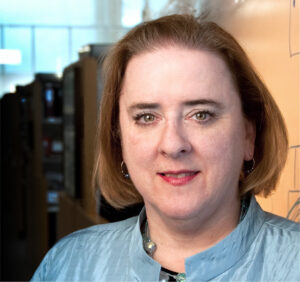
Unlocking mysteries of trait and disease heritability in dogs
2024 Edward Novitski Prize recipient Elaine Ostrander, a pioneer of the domestic dog model, discovered numerous genes affecting dog size, morphology, behavior, and disease susceptibility—many of which have relevance in humans.
-
GSA and collaborators Personal Genetics Education & Dialogue and Reclaiming STEM Institute launch NSF-funded BIO-LEAPS project to support culture change in genetics
We are thrilled to announce that the Genetics Society of America (GSA) is collaborating with the Personal Genetics Education & Dialogue (PGED) based in the Department of Genetics at Harvard Medical School, and the Reclaiming STEM Institute (RSI) on a Leading Culture Change Through Professional Societies of Biology (BIO-LEAPS) grant from the U.S. National Science…
-

Daman Saluja: Navigating Science and Policy in India
In the Paths to Science Policy series, we talk to individuals who have a passion for science policy and are active in advocacy through their various roles and careers. The series aims to inform and guide early career scientists interested in science policy. This series is brought to you by the GSA Early Career Scientist…
-
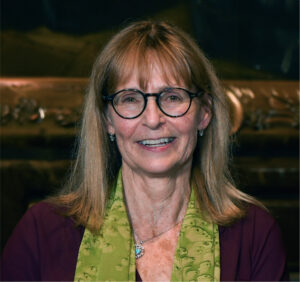
A fly geneticist’s journey into discovering rules of organ development
2024 George W. Beadle Award recipient Deborah Andrew discovered new genes and pathways in Drosophila salivary gland organogenesis. Now, her work can help optimize cell secretion in therapeutic applications and fight malaria.
-
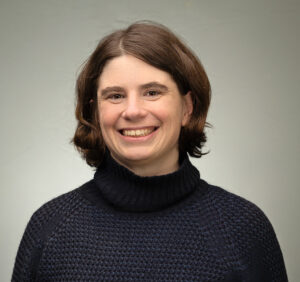
Małgorzata Gazda: How receiving the DeLill Nasser Award helped her land her dream job
Have you ever experienced an event that changes the course of your life, or in this case, your career? Małgorzata (Gosia) Gazda is Assistant Professor at the University of Montreal and in 2022, she received the DeLill Nasser Award for Professional Development in Genetics, which she used to attend and present at the 2022 Population,…
-

Hongyu Zhao joins GENETICS as new Senior Editor
A new senior editor is joining GENETICS in the Statistical Genetics and Genomics section. We’re excited to welcome Hongyu Zhao to the editorial team.
-
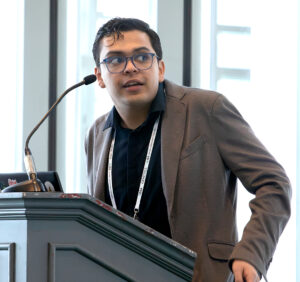
GSA Member Julio Molina Pineda Receives DeLill Nasser Award, Shines at TAGC 2024
“At any career stage, the GSA membership is an amazing investment for any genetics professional!” Julio Molina Pineda is a PhD Candidate in Cell and Molecular Biology and a Research Assistant at the University of Arkansas, and a Doctoral Academy Fellow at the Lewis Lab. In 2023, Julio was awarded the DeLill Nasser Award for…
-
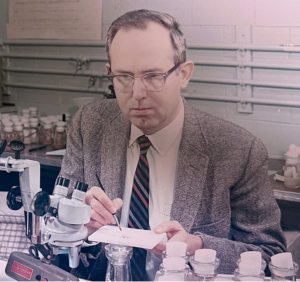
In Memoriam: Ellsworth Herman Grell (1932–2023), a pioneer of Drosophila genome engineering and annotation
Ellsworth (Ed) Grell blessed the Drosophila community through three enduring legacies: as a pioneer of chromosome mechanics, as a primary organizer and synthesizer of genetic knowledge in Drosophila, and as a graceful mentor to those fortunate to have known him personally. Ed grew up in rural Nebraska, completed his undergraduate studies at Iowa State, and…
-
Congratulations to the #Fungal24 Poster Award winners!
We are pleased to announce the recipients of the GSA Poster Awards for posters presented at the 32nd Fungal Genetics Conference! Undergraduate and graduate student members of GSA were eligible for the awards, and a hard-working team of judges made the determinations. Congratulations to all! Felicia Ebot Ojong, The University of Georgia My research is focused…
-
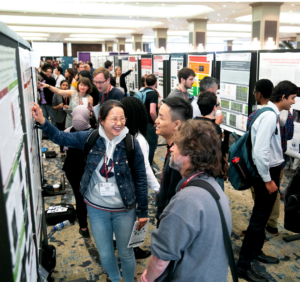
Poster presentation tips for TAGC 2024
You’ve been selected to present a poster at The Allied Genetics Conference 2024 in March—you’ve celebrated, made plans to attend, now what? This is an exciting opportunity to showcase your research and engage with fellow members of the genetics community, so you want to make sure you’re prepared. We wanted to offer you some tips…
-

Maximize your TAGC 2024 experience
A guide to all that National Harbor & DC have to offer Are you joining us for The Allied Genetics Conference 2024 in March? Make the most of your #TAGC24 experience in National Harbor! We know the science will keep you busy, but you deserve to unwind and have some fun, so we’ve curated a…
-
Early Career Leadership Spotlight: Sarah Petrosky
We’re taking time to get to know the members of the GSA’s Early Career Scientist Committees. Join us to learn more about our early career scientist advocates. Sarah PetroskyMultimedia SubcommitteeUniversity of Pittsburgh Research Interest I am interested in understanding adaptation that has been happening recently in populations by dissecting the ways that genes underlying an adaptation…
-
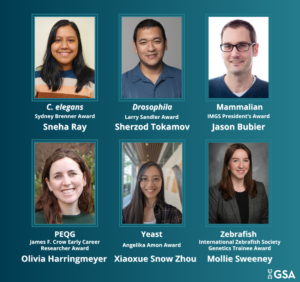
TAGC 2024 Early Career Award Winners
GSA is pleased to announce the winners of the early career awards presented at The Allied Genetics Conference 2024. These awards are specific to particular TAGC communities and recognize early career scientists’ outstanding work on their respective research organisms. The awardees will present their talks in keynote sessions at TAGC 2024. Don’t miss the opportunity…
-
Preeminent geneticists recognized with revamped GSA Awards
In 2022, GSA’s Board of Directors launched an audit to review the five major awards conferred by the Society. Today, we are thrilled to announce the recipients of the reimagined GSA Awards, including the new Genetics Society of America Early Career Medal. The scientists honored this year are recognized by their peers for their outstanding…
-
Fly Board funds outreach programs to spread the word about Drosophila research
In 2020, the Fly Board voted to use part of its reserve fund to support efforts to increase trainee participation as well as equity and diversity in the Drosophila community. An awards committee decides how the money will be spent each year, and from 2020–2022, the committee posted a very broad call for applications from…
-
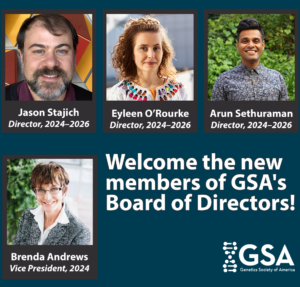
New members of the GSA Board of Directors: 2024–2026
We are pleased to announce the election of four new leaders to the GSA Board of Directors: 2024 Vice President/2025 President Brenda Andrews Professor, University of Toronto It’s an honor to continue my association with the Society by serving as Vice President of the Board of Directors. I have broad knowledge of the ongoing activities…
-

Early Career Leadership Spotlight: Faye Romero
We’re taking time to get to know the members of the GSA Early Career Scientist Subcommittees. Join us to learn more about members of the Early Career Leadership Program.
-

Creating new pathways for C. elegans research in Nigeria
The use of experimental models to answer diverse scientific questions is fundamental to scientific research. In a resource-limited research setting such as Nigeria, there is a growing need to build local expertise and capacity in the use of experimental models like C. elegans among researchers. In response to this need, our lab, Laboratory for Experimental…
-

Early Career Leadership Spotlight: Pablo Augusto de Souza Fonseca
We’re taking time to get to know the members of the GSA Early Career Scientist Subcommittees. Join us to learn more about members of the Early Career Leadership Program.