

The Genetics Society of America is pleased to announce the 2026 recipients of its GSA Awards, honoring distinguished service and achievement in the field of genetics. Nominated by their peers and selected by the GSA Board of Directors, this year’s awardees will be recognized with dedicated profiles to be published on this blog in the coming months.
Additionally, a series of virtual awards seminars will spotlight the awardees’ careers and contributions. The 2026 recipients are recognized for a wide range of impactful achievements, including scientific discovery, mentorship, the creation of community resources, and education.
The 2026 award recipients are:
Elizabeth W. Jones Award
for excellence in education

Brian Donovan
Brian Donovan is being recognized for his extensive educational efforts in the field of genetics including the development of curriculums based on humane genomics education (HGE) to teach students about human population genetics while challenging inaccurate biological assumptions that gender and racial inequality are genetically determined, and emphasizing augmentation, model-based, and quantitative reasoning. This award also celebrates his engagement with diverse communities in science education and his work to identify the impacts of genetics instruction on the inclusion of students from marginalized backgrounds in genetics classrooms. Donovan’s efforts document how the genetics curriculum describes and explains human differences.
Genetics Society of America Early Career Medal
for outstanding contributions to the field of genetics

Moisés Expósito-Alonso
University of California, Berkeley
Moisés Expósito-Alonso is being recognized for pioneering research on evolutionary adaptation, spanning the genomic architecture of adaptation across climates, rapid evolution in near-natural long-term experiments, and the loss of genetic diversity across species. The award also celebrates Moisés’s leadership of an international outdoor Arabidopsis experimental evolution project GrENE-net.org, and his commitment to mentorship of students at the University of California, Berkeley, as well as his science communication work in international biological conservation forums.
Thomas Hunt Morgan Medal
for lifetime contributions to the field of genetics

Judith Kimble
University of Wisconsin–Madison
Judith Kimble is being honored for a lifetime of pioneering scientific contributions that shaped our understanding of stem cell regulation in animals and for her visionary service which has significantly influenced research policy, training, and equity in science. This award celebrates scientific discovery including the first stem cell niche and its regulation of germline stem cells, the molecular mechanism of Notch signaling, PUF RNA binding proteins as conserved RNA regulators, PUF protein partnerships that pattern self-renewal and differentiation, a mechanism specifying sperm/oocyte cell fate, and SYS-1/β-catenin, as well as contributions to Wnt signaling more broadly. She is also recognized for her service to the genetics community as past GSA president and in leadership roles at other scientific societies; her commitment to sustained research funding and basic science, exemplified in her work influencing policy decisions during the Obama administration, is admirable. Kimble’s mentorship of students, postdocs, and junior and mid-career colleagues at her institution and around the world, and her support of independent and creative thinking are also worthy of much celebration.
George W. Beadle Award
for outstanding contributions to the community of genetics researchers

Aaron Mitchell
University of Georgia
Aaron Mitchell is being recognized for his vast scientific contributions working on budding yeast and pathogenic fungi to elucidate genetic networks controlling meiosis and pH sensing, including developing genetic approaches that have transformed the field through their application to explain pH sensing, biofilm formation, and pathogenesis. This award also celebrates Mitchell’s commitment to diversifying the academic environment through his support of women and students from underrepresented backgrounds, particularly through his co-founding and leadership of the MBL Molecular Mycology Course (MOMY), which has revolutionized the study of fungi that cause infections in humans using yeast genetics.
Edward Novitski Prize
for extraordinary creativity and intellectual ingenuity in genetics research

Michael O’Connor
University of Minnesota
Michael O’Connor is being recognized for his early work in developing molecular genetic tools for artificial chromosome engineering, and his pioneering work on elucidating the molecular mechanisms and developmental roles of TGFb and ecdysone signaling pathways in Drosophila development. Early in his career, he created a method to build large fragments of DNA in low copy number vectors and manipulate sequences within these large inserts by homologous recombination. This was the first example of a BAC (Bacterial Artificial Chromosome) and a procedure to manipulate BAC content (recombineering). Subsequently, he used genetic, molecular, and computational tools to illustrate how a BMP gradient is formed in the embryonic extracellular space to specify cell fates within the dorsal half of the embryo. Subsequent work focused on understanding the developmental roles of Activin signaling demonstrated that this branch of the TGF beta family controls body size, tissue scaling, and physiologic homeostasis. This award also celebrates his work identifying the P450 enzymes encoded by the “Halloween” genes and ordering them into a biosynthetic pathway that synthesizes the steroid hormone ecdysone from dietary cholesterol. Additional studies to understand how ecdysone peaks are generated lead to the discovery of Drosophila PTTH and the elucidation of the PTTH signal transduction pathway as well as identification of a novel role for PTTH in promoting larval light avoidance, thereby optimizing conditions for adult development. Lastly, he used a genome wide RNAi screen to discover a novel steroid transport system. This was a paradigm shifting finding that overturned the textbook view that steroid hormones simply diffuse through membranes to enter and exit cells.
Genetics Society of America Medal
for outstanding contributions to the field of genetics

Joseph Schacherer
University of Strasbourg
Joseph Schacherer is being recognized for his impactful contributions to the field through the study of population genomics in the model Saccharomyces cerevisiae and other less well-studied species, the genetic basis and architecture of complex traits, and mitochondrial genome evolution in yeast. This award also celebrates Schacherer’s work leading the 1000 Yeast Genomes Project, which has provided a reference framework for studying genetic diversity and domestication, and efforts to train and support a diverse group of early career scientists.
Genetics Society of America Mentorship Award
for excellence in contributions to the mentorship of geneticists

Irini Topalidou
Fred Hutchinson Cancer Center
Irini Topalidou is being recognized for her mentorship of more than 30 trainees who have gone on to start graduate school, medical school, postdoc fellowships, faculty positions, and biotech careers. The award also celebrates her published work on mentorship, STEM education, and career choice in publications like Science and Nature, as well as her commitment to highlighting the challenges faced by trainees and improving mentorship practices and career guidance.

Read more in
-

Thank you, GSA community!
Thank you for being a member of the Genetics Society of America! As GSA’s current president, I am writing to tell you about Society projects and initiatives that we hope you will find useful in advancing your science and your career. Scientific research is a collaborative and exciting endeavor. Scientific societies like GSA exist to…
-

Where are they now? Rosalind Franklin Young Investigator Award recipients share updates on their research
Rosalind Franklin Young Investigator Award applications are open–make sure you submit your application or nomination of a colleague by September 30, 2024.
-

University of Minnesota researchers map genome of the last living wild horse species
The study, published in G3: Genes|Genomes|Genetics, is part of larger conservation efforts to save Przewalski’s horse.
-

Congratulations to the Spring 2024 DeLill Nasser Awardees!
GSA is pleased to announce the recipients of the DeLill Nasser Award for Professional Development in Genetics for Spring 2024! Given twice a year to graduate students and postdoctoral researchers, DeLill Nasser Awards support attendance at meetings and laboratory courses. The award is named in honor of DeLill Nasser, a long-time GSA supporter and National Science Foundation…
-

Carolyn Damilola: an NFS Rising Scientist on a lifelong quest to learn more
Carolyn Damilola is an NFS Rising Scientist from Nigeria doing respiratory system research and paving the way for scientists from underrepresented communities through mentorship.
-
What does a good microgrant proposal look like?
Members of the Microgrant Review Committee share their tips for a successful proposal.
-

The first piece of the facial recognition puzzle
New research in GENETICS gives a first peek at the molecular pathway involved in recognizing faces.
-

New Senior Editor Amy MacQueen joins GENETICS
A new senior editor is joining GENETICS in the Genome Integrity and Transmission section. We’re excited to welcome Amy MacQueen to the editorial team.
-

Block party on the zebrafish sex chromosome
Research in G3 identifies a gene regulatory block of the zebrafish genome responsible for overseeing the maternal-to-zygotic-transition.
-

Unraveling the mysteries of duckweed: epigenetic insights from Spirodela polyrhiza
Research published in G3 offers insight into the impact of DNA methylation on clonal propagation in asexually reproducing plants.
-

A microbiologist’s quest to understand CRISPR in bacterial self-defense
2024 Genetics Society of America Medal recipient Luciano Marraffini determined how CRISPR-Cas systems destroy genetic targets with precision, paving the way for gene editing technology development.
-
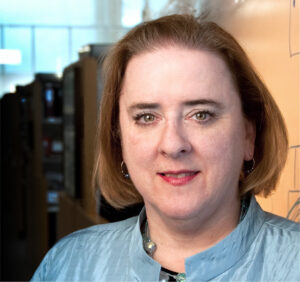
Unlocking mysteries of trait and disease heritability in dogs
2024 Edward Novitski Prize recipient Elaine Ostrander, a pioneer of the domestic dog model, discovered numerous genes affecting dog size, morphology, behavior, and disease susceptibility—many of which have relevance in humans.
-
GSA and collaborators Personal Genetics Education & Dialogue and Reclaiming STEM Institute launch NSF-funded BIO-LEAPS project to support culture change in genetics
We are thrilled to announce that the Genetics Society of America (GSA) is collaborating with the Personal Genetics Education & Dialogue (PGED) based in the Department of Genetics at Harvard Medical School, and the Reclaiming STEM Institute (RSI) on a Leading Culture Change Through Professional Societies of Biology (BIO-LEAPS) grant from the U.S. National Science…
-

Daman Saluja: Navigating Science and Policy in India
In the Paths to Science Policy series, we talk to individuals who have a passion for science policy and are active in advocacy through their various roles and careers. The series aims to inform and guide early career scientists interested in science policy. This series is brought to you by the GSA Early Career Scientist…
-

A fly geneticist’s journey into discovering rules of organ development
2024 George W. Beadle Award recipient Deborah Andrew discovered new genes and pathways in Drosophila salivary gland organogenesis. Now, her work can help optimize cell secretion in therapeutic applications and fight malaria.
-

Małgorzata Gazda: How receiving the DeLill Nasser Award helped her land her dream job
Have you ever experienced an event that changes the course of your life, or in this case, your career? Małgorzata (Gosia) Gazda is Assistant Professor at the University of Montreal and in 2022, she received the DeLill Nasser Award for Professional Development in Genetics, which she used to attend and present at the 2022 Population,…
-
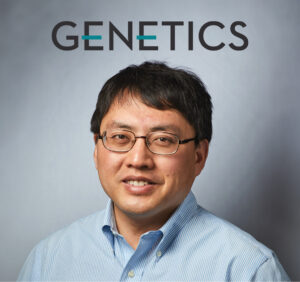
Hongyu Zhao joins GENETICS as new Senior Editor
A new senior editor is joining GENETICS in the Statistical Genetics and Genomics section. We’re excited to welcome Hongyu Zhao to the editorial team.
-
GSA Member Julio Molina Pineda Receives DeLill Nasser Award, Shines at TAGC 2024
“At any career stage, the GSA membership is an amazing investment for any genetics professional!” Julio Molina Pineda is a PhD Candidate in Cell and Molecular Biology and a Research Assistant at the University of Arkansas, and a Doctoral Academy Fellow at the Lewis Lab. In 2023, Julio was awarded the DeLill Nasser Award for…
-
In Memoriam: Ellsworth Herman Grell (1932–2023), a pioneer of Drosophila genome engineering and annotation
Ellsworth (Ed) Grell blessed the Drosophila community through three enduring legacies: as a pioneer of chromosome mechanics, as a primary organizer and synthesizer of genetic knowledge in Drosophila, and as a graceful mentor to those fortunate to have known him personally. Ed grew up in rural Nebraska, completed his undergraduate studies at Iowa State, and…
-

Congratulations to the #Fungal24 Poster Award winners!
We are pleased to announce the recipients of the GSA Poster Awards for posters presented at the 32nd Fungal Genetics Conference! Undergraduate and graduate student members of GSA were eligible for the awards, and a hard-working team of judges made the determinations. Congratulations to all! Felicia Ebot Ojong, The University of Georgia My research is focused…
-
Poster presentation tips for TAGC 2024
You’ve been selected to present a poster at The Allied Genetics Conference 2024 in March—you’ve celebrated, made plans to attend, now what? This is an exciting opportunity to showcase your research and engage with fellow members of the genetics community, so you want to make sure you’re prepared. We wanted to offer you some tips…
-

Maximize your TAGC 2024 experience
A guide to all that National Harbor & DC have to offer Are you joining us for The Allied Genetics Conference 2024 in March? Make the most of your #TAGC24 experience in National Harbor! We know the science will keep you busy, but you deserve to unwind and have some fun, so we’ve curated a…
-
Early Career Leadership Spotlight: Sarah Petrosky
We’re taking time to get to know the members of the GSA’s Early Career Scientist Committees. Join us to learn more about our early career scientist advocates. Sarah PetroskyMultimedia SubcommitteeUniversity of Pittsburgh Research Interest I am interested in understanding adaptation that has been happening recently in populations by dissecting the ways that genes underlying an adaptation…
-
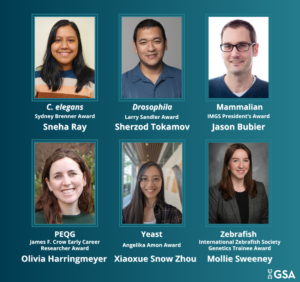
TAGC 2024 Early Career Award Winners
GSA is pleased to announce the winners of the early career awards presented at The Allied Genetics Conference 2024. These awards are specific to particular TAGC communities and recognize early career scientists’ outstanding work on their respective research organisms. The awardees will present their talks in keynote sessions at TAGC 2024. Don’t miss the opportunity…
-

Preeminent geneticists recognized with revamped GSA Awards
In 2022, GSA’s Board of Directors launched an audit to review the five major awards conferred by the Society. Today, we are thrilled to announce the recipients of the reimagined GSA Awards, including the new Genetics Society of America Early Career Medal. The scientists honored this year are recognized by their peers for their outstanding…
-
Fly Board funds outreach programs to spread the word about Drosophila research
In 2020, the Fly Board voted to use part of its reserve fund to support efforts to increase trainee participation as well as equity and diversity in the Drosophila community. An awards committee decides how the money will be spent each year, and from 2020–2022, the committee posted a very broad call for applications from…
-
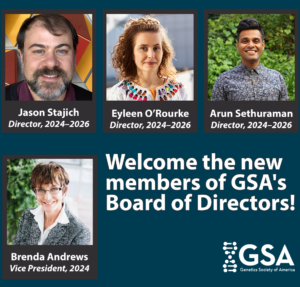
New members of the GSA Board of Directors: 2024–2026
We are pleased to announce the election of four new leaders to the GSA Board of Directors: 2024 Vice President/2025 President Brenda Andrews Professor, University of Toronto It’s an honor to continue my association with the Society by serving as Vice President of the Board of Directors. I have broad knowledge of the ongoing activities…
-

Don’t bug me, I’m at “The Fly Conference”
I thought I was attending the 67th Annual Drosophila Research Conference, but somehow ended up at a rock-and-roll concert. Fly Board President Eric Lai opened the meeting with an electric guitar riff. Luckily, his lyrics confirmed I was in the right place: “Don’t you know that the fly… is fly! It’s not an ask or…
-

How iconic campus trees can help build equity in genomic education
Discover how Alex Harkess’ quest to make genomics education accessible sparked a nationwide movement where students sequence beloved campus plants, publish real research, and unlock new pathways into science—one genome at a time.
-

A lifelong quest to understand how a cell becomes an organism
Judith Kimble, the recipient of the 2026 Thomas Hunt Morgan Medal, discovered the first stem cell niche—a finding that sets a path for her lab’s pioneering work in genetics.