

This week, Ling Loh from the Career Development subcommittee interviewed Erin Jimenez from Johns Hopkins University.
On job applications
Ling: What is your career trajectory?
Erin: My career path has been relatively traditional. I started at a community college, transferred to University of California, Los Angeles, and then went straight into a PhD program at Johns Hopkins University (JHU). After my PhD, I did a postdoc at the National Institutes of Health (NIH) in Bethesda. This postdoc lasted about eight years, partly due to the pandemic, some delays, and initial intimidation around the job application process.
I was on the job market for two years (2021–2022). In the first year, I submitted 19 applications, had three interviews, and received no offers—I didn’t even have preprints at the time. If I had received an offer, I would have accepted it.
In the second year, I submitted 47 applications, had 12 in-person interviews, and ultimately received five job offers. I attribute the success to publishing my paper which was in pre-print during the first round of applications. I decided to accept a position at JHU, partly influenced by my husband’s business location.
Ling: How long did it take you to start preparing materials for your applications and to eventually land a faculty position?
Erin: For the first round, it took several weeks to refine everything. At NIH, I was part of a writing group cohort where we peer-reviewed each other’s applications, which was very helpful. The deadline was relatively tight, so I had to gather and perfect materials while continuing my experiments—no time off from the bench.
For the second round, I made some updates to correct errors and improve clarity. I also used the Future PI Slack and shared my application with many people for feedback, while also reading other applications to learn effective approaches. This helped me improve writing, catch grammatical errors, and refine the overall presentation, especially since not everyone is naturally eloquent on paper, like myself.
Ling: Did you always aim for an R1 or R2-level university while applying?
Erin: I primarily focused on R1 institutions, since my main goal was to continue doing research at a high level. I did explore positions at primarily undergraduate institutions, such as Towson University in Maryland, and even had a Zoom interview, but quickly realized it wasn’t the right fit for me. The teaching load at that institution was equivalent to a full year, which conflicted with my desire to maintain an active R1-level research program.
I also considered medical schools with minimal teaching, but in those cases, the salary structure and grant expectations differed—my current institution covers 70% of salary during the year and 30% in the summer, which requires some teaching, whereas other places required two R01s for a position, compared to only one at JHU. Family location was another factor I considered in evaluating fit.
Ling: How did you tailor your application materials (CV, research statement, teaching statement, diversity statement) for different types of institutions?
Erin: I started by researching each university thoroughly—looking at their graduate programs, summer research experiences for undergraduates (REU/URP), and courses I might potentially teach. The goal was to make each application personal and show genuine interest.
For the diversity statement, I checked the department’s website to see if their initiatives were active, not just symbolic. I took detailed notes early on, and if I was offered an interview, I went back to these notes to create bullet points tailored to that institution.
Zoom pre-meetings were initially very stressful—I almost fainted during one of the first-round meetings. For the second round, I used two monitors: one for Zoom and one for notes, and I rehearsed extensively.
Some of the questions I got included “What are you most proud of?”, “What paper have you read recently?”, and “Describe your aims in your first grant proposal.”
I wrote down questions and potential answers specific to each university but practiced enough to avoid sounding robotic, focusing on speaking naturally, smiling, showing interest, and being personable.
Ling; Were there any resources (websites, workshops, mentors, etc.) that were especially helpful in preparing your materials?
Erin: One of the most helpful resources was talking with my postdoc PI. At first, I hadn’t spoken with him much as often as I would have liked—I was shy and rarely went to his office to just chat. It wasn’t until I was on the market when I made the effort to sit down with him more regularly, that I realized how much I could soak up his knowledge. He was very skilled at articulating ideas and helped me rehearse my talks and application materials, especially in framing the big picture—what I want to do and why it matters.
I also sought advice from other investigators in the field who are strong communicators. Observing and absorbing how they present themselves and structure their ideas was incredibly valuable for improving my own clarity and confidence.
Ling: Are there any particular organizations, listservs, or websites you would recommend for finding job openings?
Erin: I used Twitter extensively—copying the link, university name, and application link into an Excel sheet and sorting by due date to keep organized. I also signed up for LinkedIn and Nature Careers, which provide updates on new postings. Additionally, my postdoc mentor sent me any opportunities he found, which was very helpful for staying informed about relevant positions.
On interviews
Ling: What advice would you give applicants regarding the first-round (remote) interviews?
Erin: Strategically, it helps to describe your research succinctly—for example, in five minutes. A simple visual slide can work well, such as a picture with words, highlighting three major approaches, and three key takeaways from your postdoc research. This should also include how your research at the new institution will build on these points. It’s important to end on a positive note, such as describing how your lab’s future projects will rely on these approaches, and outline short- and long-term goals, demonstrating a realistic understanding of how to achieve them. For grants, it’s useful to familiarize yourself early with funding opportunities for new PIs—such as NIH R01 or R35, National Science Foundation programs—and know which institutes you would target. Even if you aren’t fully ready to submit, understanding the landscape shows preparation and foresight.
Some common questions include:
Describe your research in five minutes. I would suggest to focus on clarity and being concise, for example by highlighting three major approaches and three key takeaways from your postdoctoral work.
Describe your research highlights. Emphasize what makes your work significant and fundable, and include any novel techniques, high-impact findings, or unique approaches to leave a strong impression.
Describe your research focus at the new institution. First, outline how your research will build on your past work, identify main scientific questions you plan to pursue. Additionally, specify the personnel required to execute these projects.
Why is this department a good fit? Mentioning aspects like diversity within the department or alignment with the department’s focus can help.
- Discuss how your research complements existing work—e.g., at NIH, you had to focus on clinical relevance but now can pursue basic science.
- Have a list of potential collaborators in the department.
- Highlight core centers or facilities you could leverage (e.g., sequencing, high-throughput phenotyping, genomics cores)
What do you foresee your contributions to the department to be? Explain what you bring to the table (e.g., single-cell technology, big data integration, bench expertise.). Show that the department is a good investment in your success, which benefits both parties.
What is your approach to education and outreach? Describe how you will mentor the next generation of scientists. For example, you can outline a teaching plan: undergraduate and graduate courses, potential new courses you could develop.
How will you participate in promoting diversity in science? Highlight any experience you have in mentoring underrepresented groups or leading diversity-focused programs. Showing how you will contribute to inclusive training and recruitment in STEM can be a plus.
In general, it’s okay to make small mistakes; confidence and preparation matter more than perfection. Practice extensively—confidence improves with rehearsal.
Ling: What helped you prepare for your job talk and chalk talk?
Erin: Preparation was challenging, especially because most practice sessions were on Zoom—there wasn’t a formal, in-person board-style session initially. Over two years, I practiced extensively, including one in-person and one Zoom chalk talk. I felt I did much better in the second year.
The key is to present in a way that makes sense to you and follows your logical reasoning. Structurally, I treated it like an R01 grant: start with a title, three specific aims, and background, then include a picture of the model system and what I wanted to study. While speaking, I drew diagrams to illustrate the approaches, the tools needed (e.g., 10X Genomics), and the personnel required (e.g., technician or rotation student for repetitive tasks).
Chalk talk practice online, especially with guidance from NIH postdoc mentors, was invaluable for refining my wording and flow. On the actual day, I kept a watch or timer to ensure I finished my answers on time.
Ling: Were there any questions during your interviews that you wish you had prepared for differently?
Erin: A challenge was balancing respectfulness and professionalism. Some interviewers can get off track or dominate the conversation, and it is okay to assert yourself politely. I tend to be quiet, but during interviews, it’s important to practice speaking up confidently so that your points are heard and taken seriously.
Ling: Were you asked about your personal life? If yes, how did you tackle that question?
Erin: Technically, these questions should not be asked, but they sometimes come up in person. By the second interview, these questions can become more serious.
The best approach is to focus on one topic at a time and respond strategically. One tactic is to mirror the question back to the interviewer or answer only what is necessary, maintaining professionalism while protecting your privacy.
Ling: Were you asked to teach a class? Was that planned ahead or were you put on the spot?
Erin: Teaching expectations were generally known during the second interview process. In the first interview, they discussed responsibilities in general but nothing was fixed. In my case, I was expected to teach half of a graduate course and half of an undergraduate course.
It is helpful to know the teaching expectations by the time of your interview, but timing and framing matter. For example, asking directly about responsibilities early in a Zoom interview can unintentionally give the impression that you are reluctant to take on responsibilities. I think a better approach is to ask broader questions about how teaching, research, and service are balanced in the department or what kinds of teaching opportunities are available to new faculty. Even in departments where new PIs are officially “protected” from heavy service, committees still expect participation, so being prepared to contribute while showing genuine curiosity about expectations will reflect positively.
On your transition to your current faculty role
Ling: What does a “day in your life” in your current role look like?
Erin: I am now in my third year and looking back, the first year was particularly challenging. I cared about everything and wanted to do everything myself but quickly realized I had to prioritize and decide what to focus on, letting go of tasks that weren’t essential. Even though it can feel uncomfortable, dropping some responsibilities is necessary to avoid burnout.
Managing a lab involves finances and team selection, including making tough decisions like letting someone go. You often feel hopeful and optimistic, but sometimes things don’t turn out as planned, which is never easy.
At this stage, I rely heavily on my team to carry out research, which can be challenging, especially as a woman in science. I often spend more time at the bench because I find it hard to delegate and ask for help, so trusting others is a skill that takes time to develop.
Balancing work and personal life is also challenging—there are times when I have to make trade-offs, like time for the house, husband, or my cat, to keep everything running smoothly.
Ling: What has been the most surprising thing about starting your faculty position?
Erin: The transition to faculty was more difficult than expected, even though I didn’t have to relocate out of state. Adjusting to new responsibilities, balancing research, teaching, and administrative duties, and learning to trust and manage a team were all challenging.
On the positive side, one of the best aspects has been the financial stability (at least in my state Maryland) that comes with a faculty position, which provides peace of mind and the freedom to focus on long-term research goals.
Ling: What skills do you wish you had developed earlier that would have made the transition smoother?
Erin: I wish I had developed more soft skills, particularly in managing and motivating people, and coaching team members effectively. My experience in sports helped me understand the athlete’s perspective, but applying that to a research team is different.
It’s also important to recognize red flags early in team dynamics or project progress, which is something I still find challenging. Building these skills earlier would have made the transition to managing a lab smoother and less stressful.
Ling: How long did you take to hire your lab members, and what is your strategy to hire? How do you find the right fit?
Erin: For a young lab, hiring often relies on personal networks and word-of-mouth, especially for postdocs. In my first year, I accepted four graduate students, which is not that common. Having a small lab allows me to work one-on-one with students, which makes it easier to assess their strengths, weaknesses, and fit for the team.
I also mentor undergraduate students, though it can be hard to say no, as I often see myself in them. Much of their work involves tasks like genotyping, and I aim to give them meaningful learning experiences.
Ling: Would you be open to early career scientists reaching out to you for advice, and if so, how can they reach out to you?
Erin: Yes, at jimenez@jhu.edu.

Graduate student and postdoctoral leaders from the Early Career Scientist Committees of the GSA.
View all posts by Early Career Scientist Committees »Read more in
-

Thank you, GSA community!
Thank you for being a member of the Genetics Society of America! As GSA’s current president, I am writing to tell you about Society projects and initiatives that we hope you will find useful in advancing your science and your career. Scientific research is a collaborative and exciting endeavor. Scientific societies like GSA exist to…
-

Where are they now? Rosalind Franklin Young Investigator Award recipients share updates on their research
Rosalind Franklin Young Investigator Award applications are open–make sure you submit your application or nomination of a colleague by September 30, 2024.
-

University of Minnesota researchers map genome of the last living wild horse species
The study, published in G3: Genes|Genomes|Genetics, is part of larger conservation efforts to save Przewalski’s horse.
-

Congratulations to the Spring 2024 DeLill Nasser Awardees!
GSA is pleased to announce the recipients of the DeLill Nasser Award for Professional Development in Genetics for Spring 2024! Given twice a year to graduate students and postdoctoral researchers, DeLill Nasser Awards support attendance at meetings and laboratory courses. The award is named in honor of DeLill Nasser, a long-time GSA supporter and National Science Foundation…
-

Carolyn Damilola: an NFS Rising Scientist on a lifelong quest to learn more
Carolyn Damilola is an NFS Rising Scientist from Nigeria doing respiratory system research and paving the way for scientists from underrepresented communities through mentorship.
-
What does a good microgrant proposal look like?
Members of the Microgrant Review Committee share their tips for a successful proposal.
-

The first piece of the facial recognition puzzle
New research in GENETICS gives a first peek at the molecular pathway involved in recognizing faces.
-

New Senior Editor Amy MacQueen joins GENETICS
A new senior editor is joining GENETICS in the Genome Integrity and Transmission section. We’re excited to welcome Amy MacQueen to the editorial team.
-

Block party on the zebrafish sex chromosome
Research in G3 identifies a gene regulatory block of the zebrafish genome responsible for overseeing the maternal-to-zygotic-transition.
-

Unraveling the mysteries of duckweed: epigenetic insights from Spirodela polyrhiza
Research published in G3 offers insight into the impact of DNA methylation on clonal propagation in asexually reproducing plants.
-

A microbiologist’s quest to understand CRISPR in bacterial self-defense
2024 Genetics Society of America Medal recipient Luciano Marraffini determined how CRISPR-Cas systems destroy genetic targets with precision, paving the way for gene editing technology development.
-
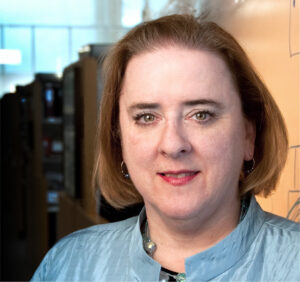
Unlocking mysteries of trait and disease heritability in dogs
2024 Edward Novitski Prize recipient Elaine Ostrander, a pioneer of the domestic dog model, discovered numerous genes affecting dog size, morphology, behavior, and disease susceptibility—many of which have relevance in humans.
-
GSA and collaborators Personal Genetics Education & Dialogue and Reclaiming STEM Institute launch NSF-funded BIO-LEAPS project to support culture change in genetics
We are thrilled to announce that the Genetics Society of America (GSA) is collaborating with the Personal Genetics Education & Dialogue (PGED) based in the Department of Genetics at Harvard Medical School, and the Reclaiming STEM Institute (RSI) on a Leading Culture Change Through Professional Societies of Biology (BIO-LEAPS) grant from the U.S. National Science…
-

Daman Saluja: Navigating Science and Policy in India
In the Paths to Science Policy series, we talk to individuals who have a passion for science policy and are active in advocacy through their various roles and careers. The series aims to inform and guide early career scientists interested in science policy. This series is brought to you by the GSA Early Career Scientist…
-
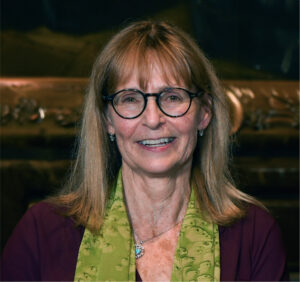
A fly geneticist’s journey into discovering rules of organ development
2024 George W. Beadle Award recipient Deborah Andrew discovered new genes and pathways in Drosophila salivary gland organogenesis. Now, her work can help optimize cell secretion in therapeutic applications and fight malaria.
-
Małgorzata Gazda: How receiving the DeLill Nasser Award helped her land her dream job
Have you ever experienced an event that changes the course of your life, or in this case, your career? Małgorzata (Gosia) Gazda is Assistant Professor at the University of Montreal and in 2022, she received the DeLill Nasser Award for Professional Development in Genetics, which she used to attend and present at the 2022 Population,…
-

Hongyu Zhao joins GENETICS as new Senior Editor
A new senior editor is joining GENETICS in the Statistical Genetics and Genomics section. We’re excited to welcome Hongyu Zhao to the editorial team.
-
GSA Member Julio Molina Pineda Receives DeLill Nasser Award, Shines at TAGC 2024
“At any career stage, the GSA membership is an amazing investment for any genetics professional!” Julio Molina Pineda is a PhD Candidate in Cell and Molecular Biology and a Research Assistant at the University of Arkansas, and a Doctoral Academy Fellow at the Lewis Lab. In 2023, Julio was awarded the DeLill Nasser Award for…
-
In Memoriam: Ellsworth Herman Grell (1932–2023), a pioneer of Drosophila genome engineering and annotation
Ellsworth (Ed) Grell blessed the Drosophila community through three enduring legacies: as a pioneer of chromosome mechanics, as a primary organizer and synthesizer of genetic knowledge in Drosophila, and as a graceful mentor to those fortunate to have known him personally. Ed grew up in rural Nebraska, completed his undergraduate studies at Iowa State, and…
-
Congratulations to the #Fungal24 Poster Award winners!
We are pleased to announce the recipients of the GSA Poster Awards for posters presented at the 32nd Fungal Genetics Conference! Undergraduate and graduate student members of GSA were eligible for the awards, and a hard-working team of judges made the determinations. Congratulations to all! Felicia Ebot Ojong, The University of Georgia My research is focused…
-
Poster presentation tips for TAGC 2024
You’ve been selected to present a poster at The Allied Genetics Conference 2024 in March—you’ve celebrated, made plans to attend, now what? This is an exciting opportunity to showcase your research and engage with fellow members of the genetics community, so you want to make sure you’re prepared. We wanted to offer you some tips…
-

Maximize your TAGC 2024 experience
A guide to all that National Harbor & DC have to offer Are you joining us for The Allied Genetics Conference 2024 in March? Make the most of your #TAGC24 experience in National Harbor! We know the science will keep you busy, but you deserve to unwind and have some fun, so we’ve curated a…
-
Early Career Leadership Spotlight: Sarah Petrosky
We’re taking time to get to know the members of the GSA’s Early Career Scientist Committees. Join us to learn more about our early career scientist advocates. Sarah PetroskyMultimedia SubcommitteeUniversity of Pittsburgh Research Interest I am interested in understanding adaptation that has been happening recently in populations by dissecting the ways that genes underlying an adaptation…
-
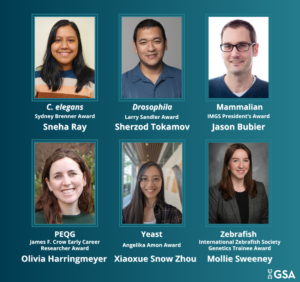
TAGC 2024 Early Career Award Winners
GSA is pleased to announce the winners of the early career awards presented at The Allied Genetics Conference 2024. These awards are specific to particular TAGC communities and recognize early career scientists’ outstanding work on their respective research organisms. The awardees will present their talks in keynote sessions at TAGC 2024. Don’t miss the opportunity…
-
Preeminent geneticists recognized with revamped GSA Awards
In 2022, GSA’s Board of Directors launched an audit to review the five major awards conferred by the Society. Today, we are thrilled to announce the recipients of the reimagined GSA Awards, including the new Genetics Society of America Early Career Medal. The scientists honored this year are recognized by their peers for their outstanding…
-
Fly Board funds outreach programs to spread the word about Drosophila research
In 2020, the Fly Board voted to use part of its reserve fund to support efforts to increase trainee participation as well as equity and diversity in the Drosophila community. An awards committee decides how the money will be spent each year, and from 2020–2022, the committee posted a very broad call for applications from…
-
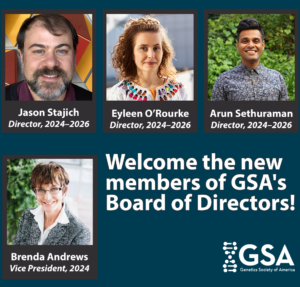
New members of the GSA Board of Directors: 2024–2026
We are pleased to announce the election of four new leaders to the GSA Board of Directors: 2024 Vice President/2025 President Brenda Andrews Professor, University of Toronto It’s an honor to continue my association with the Society by serving as Vice President of the Board of Directors. I have broad knowledge of the ongoing activities…
-

From Arabidopsis to Zea mays, there’s a knowledgebase for that
In 2022, GENETICS debuted its first annual overview of selected knowledgebases. In continuance of that tradition, this year’s piece will discuss 12 knowledgebase updates with an emphasis on economically important plant Model Organism Databases (MODs). MODs, which first appeared in the 1990s, are sophisticated knowledgebases that aim to organize and integrate heterogeneous published knowledge for…
-

Landing a faculty position: Dr. Morgan Carter
Interviews from newly appointed faculty members shed light on the path to landing a faculty position.
-

Being a staff scientist offers C. elegans researcher the perfect balance between research and mentorship
Irini Topalidou, recipient of the 2026 GSA Mentorship Award, emphasizes the important role staff scientists play in academic research and mentoring.