

Kazeem Adekunle Alayande
Multimedia Subcommittee
North-West University
What is your research interest? What organism do you work with, and what do you want to do in the future?
My research interests lie in the antimicrobial resistance profiling of pathogens and the development of biopharmaceuticals to combat infectious diseases. In the past, I have investigated bioactive compounds of plant origin, probiotics, and bioactive peptides derived from lactic acid bacteria and endophytes. Currently, I work with early-divergent fungi, particularly members of Mucoromycota (i.e., Glomeromycotina, Mucoromycotina, and Mortierellomycotina). The project explores their biodiversity, focusing on how ancient, coevolved, and endosymbiotic bacteria influence the ecological and evolutionary diversifications of these fungi across spatial scales. This aims to clarify the role of the symbioses in fungal evolution and community assemblage, given the central importance of Mucoromycota subphyla in global carbon and nutrient cycling, and their commercial utility.
Looking ahead, I plan to continue exploring bioactive metabolites from endophytes and other environmental isolates (both bacteria and fungi) as part of a broader effort to address the global burden of infectious diseases. I am also interested in the application of endophytes in sustainable environmental practices, particularly wastewater treatment, bioremediation, and biocleaning of polluted sites. For example, their use in disinfecting irrigation water and removing heavy metal could reduce crop contamination and improve food safety in an environmentally friendly way.
As a PhD-trained scientist, you have many career options. What interests you the most?
I find fulfillment in the dual role of science discovery and mentorship that a faculty position offers. Thus, I am drawn to a career in academia or research institutes where I can integrate my passion for both teaching and research. Nonetheless, my options are open to a wide spectrum of career paths in industries, government, or science communication.
My research interests are rooted in addressing pressing global challenges, such as antimicrobial resistance, the search for novel bioactive compounds, and the ecological roles of fungi and their symbionts in sustaining ecosystems. I am fascinated by how microbial diversity and microbial interactions contribute to both human health and environmental sustainability. This line of research not only has immediate biomedical applications, but also carries long-term ecological and agricultural significance. As a faculty member, I aspire to build an interdisciplinary research program that advances knowledge in these areas while training students to think critically and pursue innovative solutions.
Equally important to me is the teaching dimension of academia. Teaching is an opportunity to inspire curiosity and empower students with necessary analytical skills. Engaging students with real-world problems and exposing them to research early in their academic journey can transform classrooms into hubs of creativity and collaboration. Teaching and mentorship are central to this vision because guiding students through both successes and challenges cultivates resilience and lifelong learning. Ultimately, a faculty career offers a balance between advancing scientific discovery and shaping future generations of scientists. Thus, an opportunity to contribute to the world of knowledge while fostering growth in others resonates with my long-term professional and personal goals.
In addition to your research, how do you want to advance the scientific enterprise?
Beyond research, advancing science is a collective effort that requires effective outreach and collaboration. I plan to contribute by promoting open science practices, engaging in community-based research, and building partnerships that translate scientific findings into societal benefit. For instance, my work on microbial biodiversity and bioactive metabolites has direct relevance to human health, agriculture, and environmental sustainability. By disseminating knowledge through publications, conferences, and community outreach programs, I aim to strengthen the bridge between research and practice, ensuring that science serves not only as a driver of discovery but also as a means to address real-world challenges.
Additionally, preparing the next generation of scientists is central to advancing the scientific enterprise. I intend to be actively involved in organizing workshops and training programs for graduate students within and beyond my community. Such initiatives will provide students with technical expertise, career development opportunities, and a broader scientific perspective—ultimately helping them build successful careers while contributing to collective scientific progress.
As a leader within the Genetics Society of America, what do you hope to accomplish?
I hope to further commit to continuously advocating for the importance of genetics research and its role in addressing global challenges related to health, sustainable agriculture, and environmental wellbeing. I aim to foster an inclusive and supportive collaborative research network that connects researchers with shared interests. Additionally, I will help to raise awareness of the various mentorship opportunities offered by GSA to graduate students and early career scientists which is crucial to supporting their career development.
I will dedicate myself to actively contributing to the Society’s mission of communicating genetics research to the public, educators, and policymakers. I will also seek to strengthen international collaborations to broaden GSA’s global impact. Finally, I aspire to contribute meaningfully towards ensuring the Society remains forward-looking and continues to provide resources necessary to prepare the next generation of geneticists.
Previous leadership experience
During my mandatory one year of the National Youth Service Corps after my first degree, I served as the president of the Muslim corps members in my state of deployment, while also holding the position of general secretary for the zone, which comprised five different states. Later, during my PhD program at the North-West University, I joined a lab with a large research group. From my second year onward, I served as the lab manager, responsible for coordinating and overseeing all research activities within the group.

Read more in
-

Thank you, GSA community!
Thank you for being a member of the Genetics Society of America! As GSA’s current president, I am writing to tell you about Society projects and initiatives that we hope you will find useful in advancing your science and your career. Scientific research is a collaborative and exciting endeavor. Scientific societies like GSA exist to…
-

Where are they now? Rosalind Franklin Young Investigator Award recipients share updates on their research
Rosalind Franklin Young Investigator Award applications are open–make sure you submit your application or nomination of a colleague by September 30, 2024.
-

University of Minnesota researchers map genome of the last living wild horse species
The study, published in G3: Genes|Genomes|Genetics, is part of larger conservation efforts to save Przewalski’s horse.
-

Congratulations to the Spring 2024 DeLill Nasser Awardees!
GSA is pleased to announce the recipients of the DeLill Nasser Award for Professional Development in Genetics for Spring 2024! Given twice a year to graduate students and postdoctoral researchers, DeLill Nasser Awards support attendance at meetings and laboratory courses. The award is named in honor of DeLill Nasser, a long-time GSA supporter and National Science Foundation…
-

Carolyn Damilola: an NFS Rising Scientist on a lifelong quest to learn more
Carolyn Damilola is an NFS Rising Scientist from Nigeria doing respiratory system research and paving the way for scientists from underrepresented communities through mentorship.
-
What does a good microgrant proposal look like?
Members of the Microgrant Review Committee share their tips for a successful proposal.
-

The first piece of the facial recognition puzzle
New research in GENETICS gives a first peek at the molecular pathway involved in recognizing faces.
-

New Senior Editor Amy MacQueen joins GENETICS
A new senior editor is joining GENETICS in the Genome Integrity and Transmission section. We’re excited to welcome Amy MacQueen to the editorial team.
-

Block party on the zebrafish sex chromosome
Research in G3 identifies a gene regulatory block of the zebrafish genome responsible for overseeing the maternal-to-zygotic-transition.
-

Unraveling the mysteries of duckweed: epigenetic insights from Spirodela polyrhiza
Research published in G3 offers insight into the impact of DNA methylation on clonal propagation in asexually reproducing plants.
-

A microbiologist’s quest to understand CRISPR in bacterial self-defense
2024 Genetics Society of America Medal recipient Luciano Marraffini determined how CRISPR-Cas systems destroy genetic targets with precision, paving the way for gene editing technology development.
-
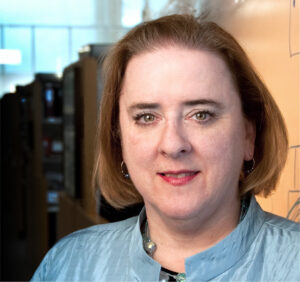
Unlocking mysteries of trait and disease heritability in dogs
2024 Edward Novitski Prize recipient Elaine Ostrander, a pioneer of the domestic dog model, discovered numerous genes affecting dog size, morphology, behavior, and disease susceptibility—many of which have relevance in humans.
-
GSA and collaborators Personal Genetics Education & Dialogue and Reclaiming STEM Institute launch NSF-funded BIO-LEAPS project to support culture change in genetics
We are thrilled to announce that the Genetics Society of America (GSA) is collaborating with the Personal Genetics Education & Dialogue (PGED) based in the Department of Genetics at Harvard Medical School, and the Reclaiming STEM Institute (RSI) on a Leading Culture Change Through Professional Societies of Biology (BIO-LEAPS) grant from the U.S. National Science…
-

Daman Saluja: Navigating Science and Policy in India
In the Paths to Science Policy series, we talk to individuals who have a passion for science policy and are active in advocacy through their various roles and careers. The series aims to inform and guide early career scientists interested in science policy. This series is brought to you by the GSA Early Career Scientist…
-
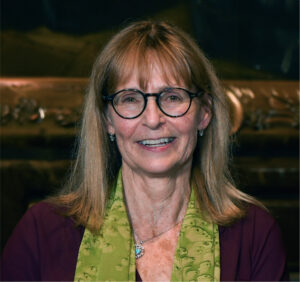
A fly geneticist’s journey into discovering rules of organ development
2024 George W. Beadle Award recipient Deborah Andrew discovered new genes and pathways in Drosophila salivary gland organogenesis. Now, her work can help optimize cell secretion in therapeutic applications and fight malaria.
-
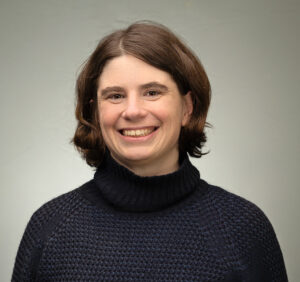
Małgorzata Gazda: How receiving the DeLill Nasser Award helped her land her dream job
Have you ever experienced an event that changes the course of your life, or in this case, your career? Małgorzata (Gosia) Gazda is Assistant Professor at the University of Montreal and in 2022, she received the DeLill Nasser Award for Professional Development in Genetics, which she used to attend and present at the 2022 Population,…
-
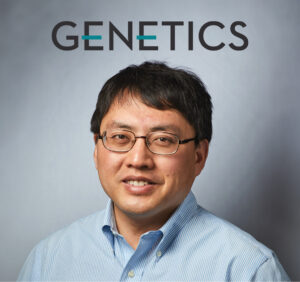
Hongyu Zhao joins GENETICS as new Senior Editor
A new senior editor is joining GENETICS in the Statistical Genetics and Genomics section. We’re excited to welcome Hongyu Zhao to the editorial team.
-
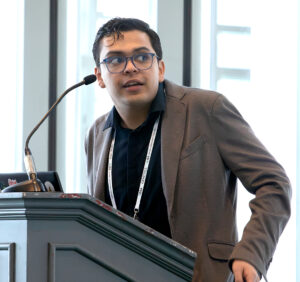
GSA Member Julio Molina Pineda Receives DeLill Nasser Award, Shines at TAGC 2024
“At any career stage, the GSA membership is an amazing investment for any genetics professional!” Julio Molina Pineda is a PhD Candidate in Cell and Molecular Biology and a Research Assistant at the University of Arkansas, and a Doctoral Academy Fellow at the Lewis Lab. In 2023, Julio was awarded the DeLill Nasser Award for…
-
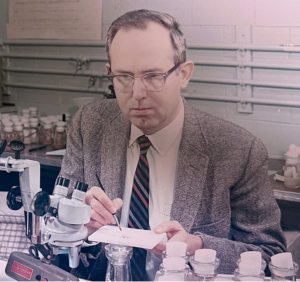
In Memoriam: Ellsworth Herman Grell (1932–2023), a pioneer of Drosophila genome engineering and annotation
Ellsworth (Ed) Grell blessed the Drosophila community through three enduring legacies: as a pioneer of chromosome mechanics, as a primary organizer and synthesizer of genetic knowledge in Drosophila, and as a graceful mentor to those fortunate to have known him personally. Ed grew up in rural Nebraska, completed his undergraduate studies at Iowa State, and…
-

Congratulations to the #Fungal24 Poster Award winners!
We are pleased to announce the recipients of the GSA Poster Awards for posters presented at the 32nd Fungal Genetics Conference! Undergraduate and graduate student members of GSA were eligible for the awards, and a hard-working team of judges made the determinations. Congratulations to all! Felicia Ebot Ojong, The University of Georgia My research is focused…
-
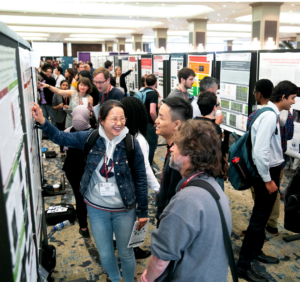
Poster presentation tips for TAGC 2024
You’ve been selected to present a poster at The Allied Genetics Conference 2024 in March—you’ve celebrated, made plans to attend, now what? This is an exciting opportunity to showcase your research and engage with fellow members of the genetics community, so you want to make sure you’re prepared. We wanted to offer you some tips…
-

Maximize your TAGC 2024 experience
A guide to all that National Harbor & DC have to offer Are you joining us for The Allied Genetics Conference 2024 in March? Make the most of your #TAGC24 experience in National Harbor! We know the science will keep you busy, but you deserve to unwind and have some fun, so we’ve curated a…
-
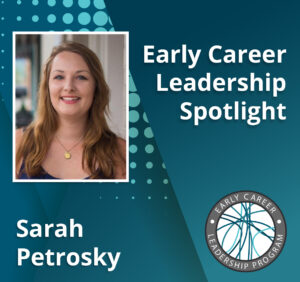
Early Career Leadership Spotlight: Sarah Petrosky
We’re taking time to get to know the members of the GSA’s Early Career Scientist Committees. Join us to learn more about our early career scientist advocates. Sarah PetroskyMultimedia SubcommitteeUniversity of Pittsburgh Research Interest I am interested in understanding adaptation that has been happening recently in populations by dissecting the ways that genes underlying an adaptation…
-
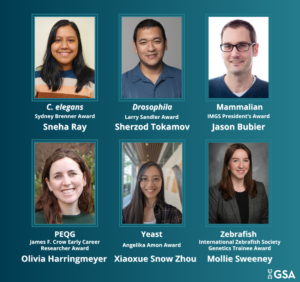
TAGC 2024 Early Career Award Winners
GSA is pleased to announce the winners of the early career awards presented at The Allied Genetics Conference 2024. These awards are specific to particular TAGC communities and recognize early career scientists’ outstanding work on their respective research organisms. The awardees will present their talks in keynote sessions at TAGC 2024. Don’t miss the opportunity…
-

Preeminent geneticists recognized with revamped GSA Awards
In 2022, GSA’s Board of Directors launched an audit to review the five major awards conferred by the Society. Today, we are thrilled to announce the recipients of the reimagined GSA Awards, including the new Genetics Society of America Early Career Medal. The scientists honored this year are recognized by their peers for their outstanding…
-
Fly Board funds outreach programs to spread the word about Drosophila research
In 2020, the Fly Board voted to use part of its reserve fund to support efforts to increase trainee participation as well as equity and diversity in the Drosophila community. An awards committee decides how the money will be spent each year, and from 2020–2022, the committee posted a very broad call for applications from…
-
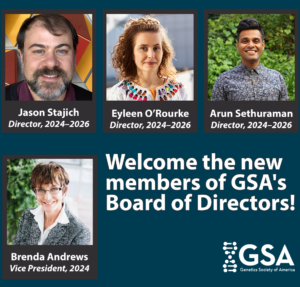
New members of the GSA Board of Directors: 2024–2026
We are pleased to announce the election of four new leaders to the GSA Board of Directors: 2024 Vice President/2025 President Brenda Andrews Professor, University of Toronto It’s an honor to continue my association with the Society by serving as Vice President of the Board of Directors. I have broad knowledge of the ongoing activities…
-

The Annual Drosophila Research Conference spans generations of scientists
For generations of Drosophila researchers, the Annual Drosophila Research Conference has been more than a place to share science—it’s a community. Hear from first-time attendees and longtime participants about the connections, mentorship, discoveries, and opportunities that keep them coming back to Dros year after year.
-

Early Career Leadership Spotlight: Sara McPherson
We’re taking time to get to know the members of the GSA Early Career Scientist Subcommittees. Join us to learn more about members of the Early Career Leadership Program.
-

Congratulations to the 2026 Yeast Poster Award recipients!
This year, GSA recognizes outstanding student research at the Yeast Genetics Meeting, honoring exceptional presentations by undergraduate and graduate student members. Award recipients are selected based on both the scientific merit of their research and the clarity of their presentation. Please join us in congratulating this year’s awardees. Nasima AkhterUniversity of Rochester I study the…