

The integrity of science in the United States is under threat and we need your help. The Office of Management and Budget (OMB) “Regulation for Federal Financial Assistance” poses drastic challenges to the scientific enterprise because it puts all federal research funding at risk of political interference. If codified into law, these changes will affect your research projects and your ability to choose and attend conferences, collaborate with international researchers from certain countries, pay publication charges, and more.
GSA remains committed to advocating for sustained research funding and scientific integrity, and supporting our genetics community.
What can I do to help?
We urge members of our genetics and genomics community to submit a public comment on the recently proposed regulations byJuly 13, 2026. Please do not wait until the deadline as servers could crash and OMB has stated they will not grant a deadline extension. All comments must be submitted directly through https://www.regulations.gov/document/OMB-2026-0034-0001.
How will the proposed revisions affect me?
These proposed revisions will:
- Give political appointees, rather than apolitical expert committees at agencies like NSF and NIH final approval on federal research grants to ensure compliance with presidential policy priorities. Scientific peer review of research proposals would remain “advisory and does not replace agency discretion.”
- Prohibit the mention of gender/sex differences in grants, making it difficult for scientists studying evolutionary and population genetics, genetics of sex, developmental biology, and doing biomedical research, to describe their work. This change would also pose challenges for scientists studying genetics in model organisms like Drosophila, C. elegans, Zebrafish, and mice, among others, as this research frequently touches on sex-specific biological differences to explain fundamental genetic and evolutionary processes.
- Place restrictions on foreign collaborations, prohibiting the use of federal funds for partnerships with certain foreign countries or entities (which remain undefined).
- Eliminate reimbursement and payment for publication, conference attendance, and membership expenses, unless prior federal approval in select cases is granted.
These regulations, if codified, will extend far beyond this current Administration, having longer-term far-reaching implications and affecting the entire federal government, all agencies, and anyone who operates on federal funding.
Why should I submit a comment? Isn’t GSA submitting one?
Yes, GSA will submit one as a Society. However, to have a true impact, the government must receive as many individual comments as possible. It is common for proposals of such magnitude to receive comment numbers in the millions or tens of millions. This is why we encourage you to submit a comment independently from GSA’s or other organizations’ comments. Do not assume that your voice will be heard through GSA’s letter alone, because grouped comments or sign-on letters will only be counted as one comment by OMB.
How do I write an effective comment?
A former NIH program officer has written an excellent guide on how to efficiently write and submit a comment that could have a true impact. Highlights of this guidance include:
- List the specific section number (e.g., §200.205) of the Notice of Proposed Rulemaking (NPRM) in brackets and if addressing multiple sections, list each section’s number at the beginning of each distinct paragraph.
- Explain who you are and why you can provide this perspective (e.g., a federally funded scientist, a scientific society).
- Explain how the proposed language in the section will specifically affect you and your research. You’ve likely felt these impacts for the past 15+ months, which is another reason it’s so important to submit public comments, as this rule would codify these previous changes first proposed through Executive Order.
- Give clear examples that demonstrate impact to your lab, graduate students, and ability to continue the research
- Outline waste of already spent research funds if grants are abruptly terminated
- Detail what happens if you cannot use federal grant funds to publish your NIH- or NSF-funded research or present it at scientific conferences
- Share the impacts both to your lab and to the scientific enterprise of an inability to collaborate with researchers outside of the U.S.
- While emotional appeals are helpful for advocacy with elected representatives, in this case, regulatory reviewers will look for objective, straightforward evidence; avoid using statements lacking evidence or hyperbolic language
- OMB has cited three goals with these changes: increasing transparency, clarifying regulatory status, and reducing burden on award recipients. Refer back to these goals and state how many of these proposed changes would actually reduce transparency and increase burden on awardees.
- Do not copy/paste comments from a form letter, sign-on letter, or public petition. Comments written in your own words, sharing your own experiences, carry more legal weight and OMB is required to respond to them.
- Avoid the use of large language model AI tools to craft your comment. If you use tools like ChatGPT or Claude to organize your thoughts, use them with caution; fact check the results and read carefully through the proposed text to adjust any incorrect information and ensure your experiences are accurately portrayed and the final product does not read as generic, heavily automated text.
- While the comment box limits you to 5,000 characters (including spaces), you can upload a file with additional text.
- Be specific and factual; provide quantitative data of the impacts, where possible.
Why does my comment matter? Isn’t it a waste of time and effort?
It is of utmost importance that we continue advocating to protect science. OMB is required by law under the Administrative Procedure Act to read and respond to every substantive comment submitted through the formal rulemaking process before finalizing the rule. Your comment will become part of the permanent public record, rendering OMB and the Administration unable to argue that there was no opposition from the public. Additionally, a record of comments sets the foundation for future legal and legislative action. When reviewing cases, the courts can see whether OMB adequately responded to public opposition, and a strong record of opposition strengthens any legal challenge of the proposed revisions. Finally, Congress watches comment volumes. Seeing many thousands of detailed comments signals that a rule is politically controversial, possibly warranting legislative action.
Additionally, midterms are coming up—elected members of Congress, from either party, care about keeping their jobs. Therefore, after leaving a detailed comment, continue calling your Senators and Representative and urge them to vocally oppose these regulations too.
Can I submit a comment anonymously?
Yes. If you wish to remain anonymous, make sure you indicate you are submitting as an “Anonymous” entity and do not enter your name or organization in the provided fields, which are optional. OMB gives more weight to comments from individuals or organizations that identify themselves but by law, they must consider all comments that come in, including anonymous ones. As mentioned above, Congress takes into account the volume of comments and this may also matter if and when this issue lands in the courts, so it’s important that scientists show up in great numbers. Please note that everything you include in your form when submitting your comment will be posted publicly on regulations.gov.
Can I use my professional or institution email address?
Make sure you obtain guidance from your employer. Some institutions may oppose you using your institution address to leave a comment.
Can I submit multiple comments?
Yes, you can submit multiple comments and the more comments recorded, the better; however, make sure your comments each address different sections in a substantive manner. Do not repost others’ comments or post the same comment multiple times as OMB will not count those.
I am not a U.S. citizen or do not live in the U.S. Can I leave a comment?
Yes. OMB must also consider these comments. We encourage you to share how these regulations impact international collaborations and the standing of the U.S. scientific enterprise on a global scale. Additionally, it’s important to share how scientific research will be disrupted by proposed restrictions on international collaborations and how that will ultimately hurt the U.S.’s economic interest.
Is there anything I shouldn’t include in my comment?
Your comments should not touch on the indirect cost rate negotiation system. This is because even though the revisions point to a preference for lower indirect costs to institutions in the review process, OMB has stated they will not consider or respond to such comments in the final rule.
I was sent a link to another platform to submit my comments to.
Comments will only be accepted if posted directly to regulations.gov. Do not post elsewhere or on external sites.
Are there any resources I can use to form my comment or articles I can read to better understand the revisions?
White House seeks to tighten political oversight of grantmaking in ScienceInsider
What We Need to do NEXT: OMB’s Proposed Federal Financial Assistance Rule (OMB-2026-0034) by Elizabeth Ginexi
Proposed Changes to the OMB Uniform Guidance (breakdown per section/area of focus) by the Council of Nonprofits
GSA is hosting two one-hour virtual working sessions on Monday, June 29 (4:00–5:00 p.m. EDT) and Friday, July 10 (9:00–10:00 a.m. EDT), where participants can independently work on their comments, or collaborate with peers and discuss comments with others in a breakout room. Register to secure your spot; come in and out as needed—there is no need to join for the full hour.

Read more in
-

Thank you, GSA community!
Thank you for being a member of the Genetics Society of America! As GSA’s current president, I am writing to tell you about Society projects and initiatives that we hope you will find useful in advancing your science and your career. Scientific research is a collaborative and exciting endeavor. Scientific societies like GSA exist to…
-

Where are they now? Rosalind Franklin Young Investigator Award recipients share updates on their research
Rosalind Franklin Young Investigator Award applications are open–make sure you submit your application or nomination of a colleague by September 30, 2024.
-

University of Minnesota researchers map genome of the last living wild horse species
The study, published in G3: Genes|Genomes|Genetics, is part of larger conservation efforts to save Przewalski’s horse.
-

Congratulations to the Spring 2024 DeLill Nasser Awardees!
GSA is pleased to announce the recipients of the DeLill Nasser Award for Professional Development in Genetics for Spring 2024! Given twice a year to graduate students and postdoctoral researchers, DeLill Nasser Awards support attendance at meetings and laboratory courses. The award is named in honor of DeLill Nasser, a long-time GSA supporter and National Science Foundation…
-

Carolyn Damilola: an NFS Rising Scientist on a lifelong quest to learn more
Carolyn Damilola is an NFS Rising Scientist from Nigeria doing respiratory system research and paving the way for scientists from underrepresented communities through mentorship.
-
What does a good microgrant proposal look like?
Members of the Microgrant Review Committee share their tips for a successful proposal.
-

The first piece of the facial recognition puzzle
New research in GENETICS gives a first peek at the molecular pathway involved in recognizing faces.
-

New Senior Editor Amy MacQueen joins GENETICS
A new senior editor is joining GENETICS in the Genome Integrity and Transmission section. We’re excited to welcome Amy MacQueen to the editorial team.
-

Block party on the zebrafish sex chromosome
Research in G3 identifies a gene regulatory block of the zebrafish genome responsible for overseeing the maternal-to-zygotic-transition.
-

Unraveling the mysteries of duckweed: epigenetic insights from Spirodela polyrhiza
Research published in G3 offers insight into the impact of DNA methylation on clonal propagation in asexually reproducing plants.
-

A microbiologist’s quest to understand CRISPR in bacterial self-defense
2024 Genetics Society of America Medal recipient Luciano Marraffini determined how CRISPR-Cas systems destroy genetic targets with precision, paving the way for gene editing technology development.
-

Unlocking mysteries of trait and disease heritability in dogs
2024 Edward Novitski Prize recipient Elaine Ostrander, a pioneer of the domestic dog model, discovered numerous genes affecting dog size, morphology, behavior, and disease susceptibility—many of which have relevance in humans.
-
GSA and collaborators Personal Genetics Education & Dialogue and Reclaiming STEM Institute launch NSF-funded BIO-LEAPS project to support culture change in genetics
We are thrilled to announce that the Genetics Society of America (GSA) is collaborating with the Personal Genetics Education & Dialogue (PGED) based in the Department of Genetics at Harvard Medical School, and the Reclaiming STEM Institute (RSI) on a Leading Culture Change Through Professional Societies of Biology (BIO-LEAPS) grant from the U.S. National Science…
-

Daman Saluja: Navigating Science and Policy in India
In the Paths to Science Policy series, we talk to individuals who have a passion for science policy and are active in advocacy through their various roles and careers. The series aims to inform and guide early career scientists interested in science policy. This series is brought to you by the GSA Early Career Scientist…
-

A fly geneticist’s journey into discovering rules of organ development
2024 George W. Beadle Award recipient Deborah Andrew discovered new genes and pathways in Drosophila salivary gland organogenesis. Now, her work can help optimize cell secretion in therapeutic applications and fight malaria.
-

Małgorzata Gazda: How receiving the DeLill Nasser Award helped her land her dream job
Have you ever experienced an event that changes the course of your life, or in this case, your career? Małgorzata (Gosia) Gazda is Assistant Professor at the University of Montreal and in 2022, she received the DeLill Nasser Award for Professional Development in Genetics, which she used to attend and present at the 2022 Population,…
-

Hongyu Zhao joins GENETICS as new Senior Editor
A new senior editor is joining GENETICS in the Statistical Genetics and Genomics section. We’re excited to welcome Hongyu Zhao to the editorial team.
-
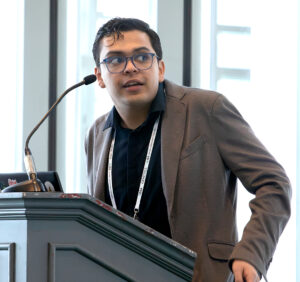
GSA Member Julio Molina Pineda Receives DeLill Nasser Award, Shines at TAGC 2024
“At any career stage, the GSA membership is an amazing investment for any genetics professional!” Julio Molina Pineda is a PhD Candidate in Cell and Molecular Biology and a Research Assistant at the University of Arkansas, and a Doctoral Academy Fellow at the Lewis Lab. In 2023, Julio was awarded the DeLill Nasser Award for…
-
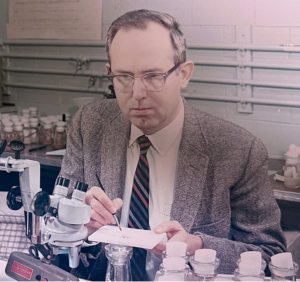
In Memoriam: Ellsworth Herman Grell (1932–2023), a pioneer of Drosophila genome engineering and annotation
Ellsworth (Ed) Grell blessed the Drosophila community through three enduring legacies: as a pioneer of chromosome mechanics, as a primary organizer and synthesizer of genetic knowledge in Drosophila, and as a graceful mentor to those fortunate to have known him personally. Ed grew up in rural Nebraska, completed his undergraduate studies at Iowa State, and…
-

Congratulations to the #Fungal24 Poster Award winners!
We are pleased to announce the recipients of the GSA Poster Awards for posters presented at the 32nd Fungal Genetics Conference! Undergraduate and graduate student members of GSA were eligible for the awards, and a hard-working team of judges made the determinations. Congratulations to all! Felicia Ebot Ojong, The University of Georgia My research is focused…
-
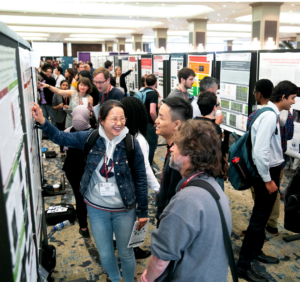
Poster presentation tips for TAGC 2024
You’ve been selected to present a poster at The Allied Genetics Conference 2024 in March—you’ve celebrated, made plans to attend, now what? This is an exciting opportunity to showcase your research and engage with fellow members of the genetics community, so you want to make sure you’re prepared. We wanted to offer you some tips…
-

Maximize your TAGC 2024 experience
A guide to all that National Harbor & DC have to offer Are you joining us for The Allied Genetics Conference 2024 in March? Make the most of your #TAGC24 experience in National Harbor! We know the science will keep you busy, but you deserve to unwind and have some fun, so we’ve curated a…
-
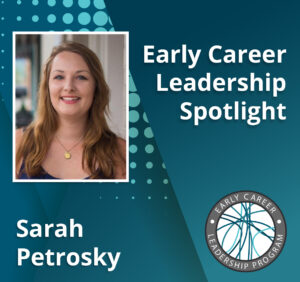
Early Career Leadership Spotlight: Sarah Petrosky
We’re taking time to get to know the members of the GSA’s Early Career Scientist Committees. Join us to learn more about our early career scientist advocates. Sarah PetroskyMultimedia SubcommitteeUniversity of Pittsburgh Research Interest I am interested in understanding adaptation that has been happening recently in populations by dissecting the ways that genes underlying an adaptation…
-
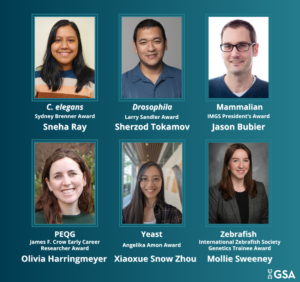
TAGC 2024 Early Career Award Winners
GSA is pleased to announce the winners of the early career awards presented at The Allied Genetics Conference 2024. These awards are specific to particular TAGC communities and recognize early career scientists’ outstanding work on their respective research organisms. The awardees will present their talks in keynote sessions at TAGC 2024. Don’t miss the opportunity…
-
Preeminent geneticists recognized with revamped GSA Awards
In 2022, GSA’s Board of Directors launched an audit to review the five major awards conferred by the Society. Today, we are thrilled to announce the recipients of the reimagined GSA Awards, including the new Genetics Society of America Early Career Medal. The scientists honored this year are recognized by their peers for their outstanding…
-
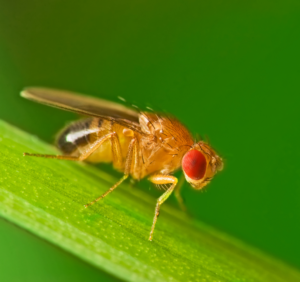
Fly Board funds outreach programs to spread the word about Drosophila research
In 2020, the Fly Board voted to use part of its reserve fund to support efforts to increase trainee participation as well as equity and diversity in the Drosophila community. An awards committee decides how the money will be spent each year, and from 2020–2022, the committee posted a very broad call for applications from…
-
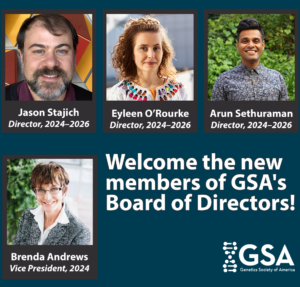
New members of the GSA Board of Directors: 2024–2026
We are pleased to announce the election of four new leaders to the GSA Board of Directors: 2024 Vice President/2025 President Brenda Andrews Professor, University of Toronto It’s an honor to continue my association with the Society by serving as Vice President of the Board of Directors. I have broad knowledge of the ongoing activities…
-

GENETICS and G3 welcome new editors
We’re excited to welcome new editors to the GENETICS and G3 editorial boards.
-

From genome to discovery: a genome alone is not enough
Standardizing how genomes are sequenced, assembled, annotated, and reported on will make them more comparable, reproducible, and reusable for the research community.
-

Early Career Leadership Spotlight: Samuel Isife
We’re taking time to get to know the members of the GSA Early Career Scientist Subcommittees. Join us to learn more about members of the Early Career Leadership Program.